
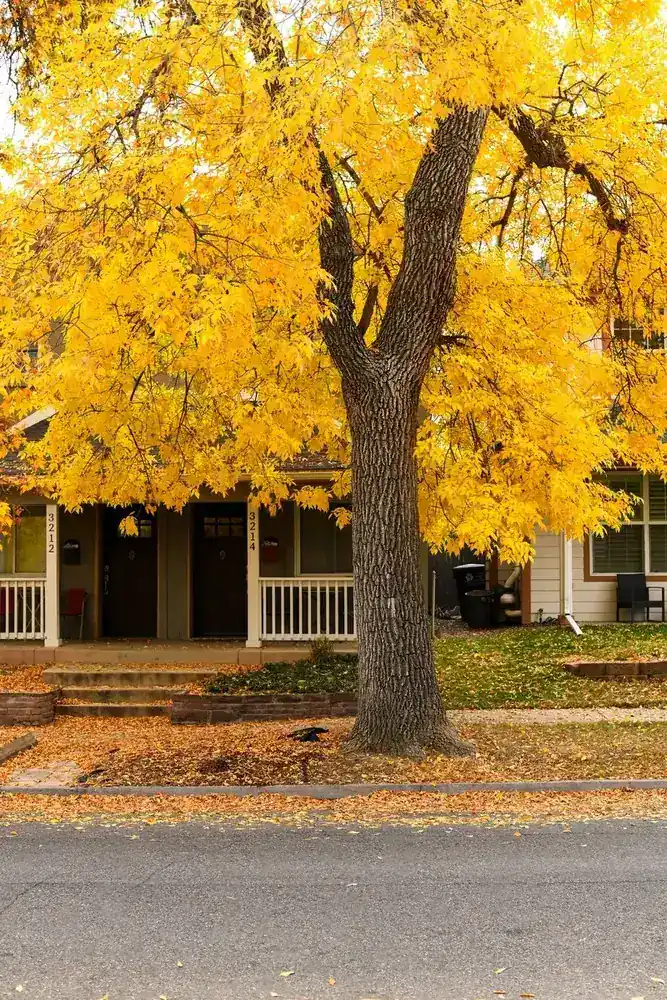
Douglas County, Kansas
Tree Service in Lecompton, KS
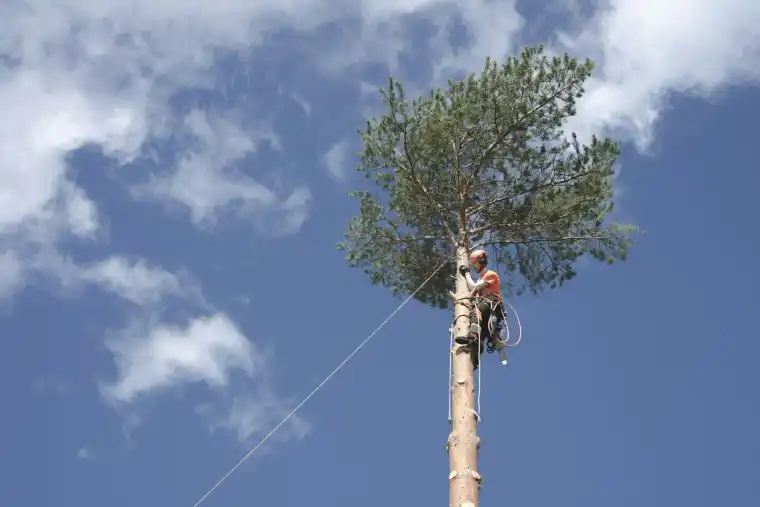
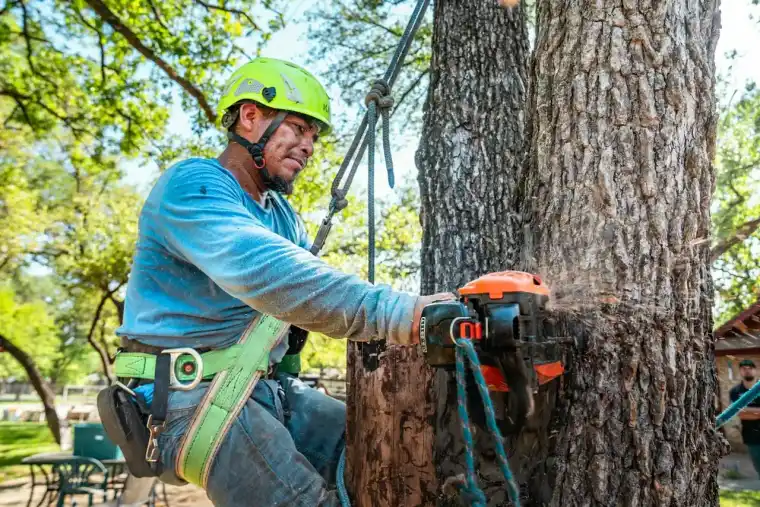
River bluff properties along the Kaw with mature hardwoods on slopes. Steep access is common, which is what decides whether a job needs a crane or a climber.
Free written estimates · Cleanup included · Monday to Friday, 8 to 5
Serving Lecompton
What we get called for in Lecompton
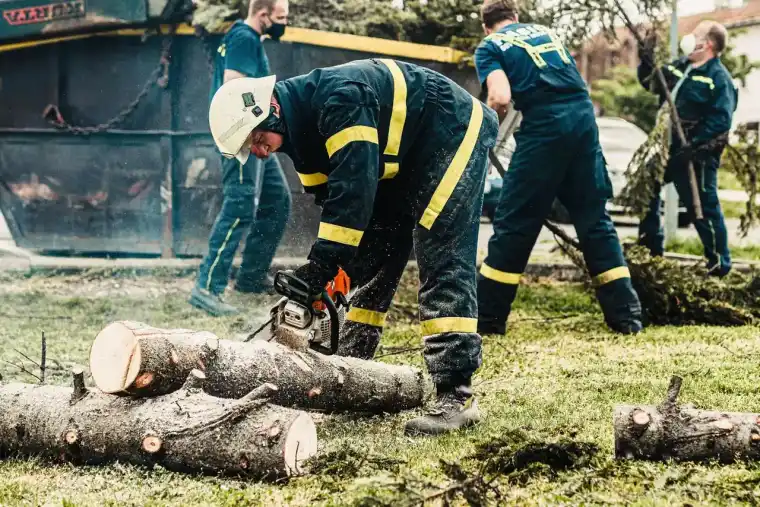
Tree Removal
Taking down a tree safely when it is dead, dying, or growing somewhere it cannot stay.
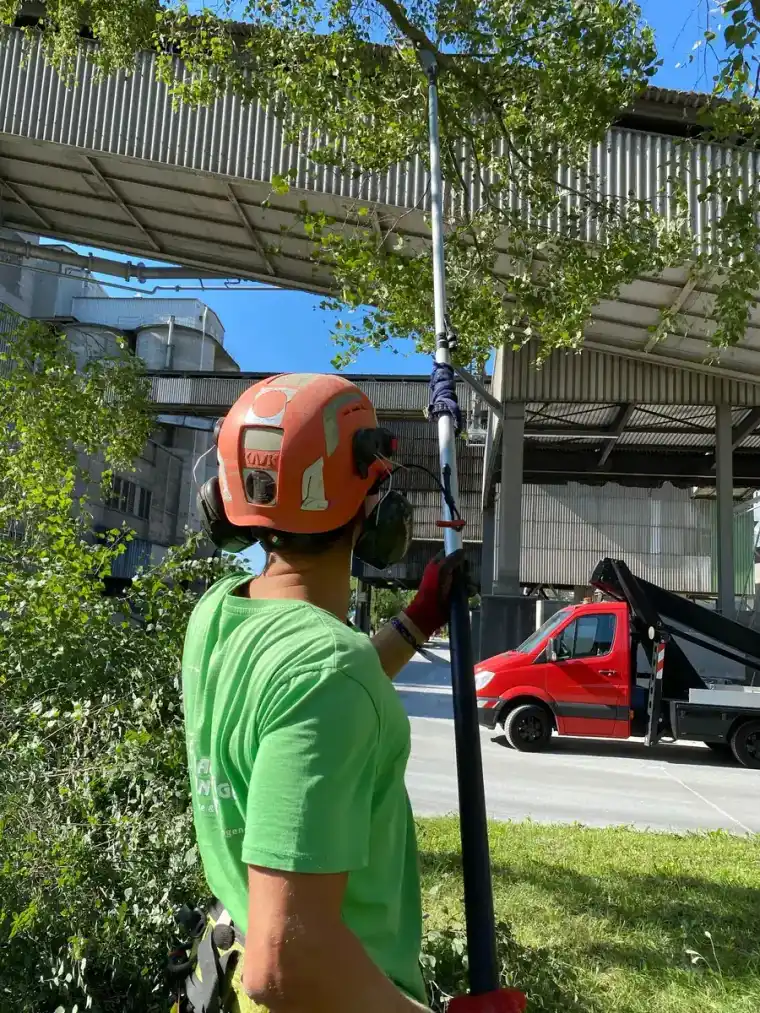
Tree Trimming
Clearing limbs off roofs, driveways, and power drops, and thinning canopies before storm season.
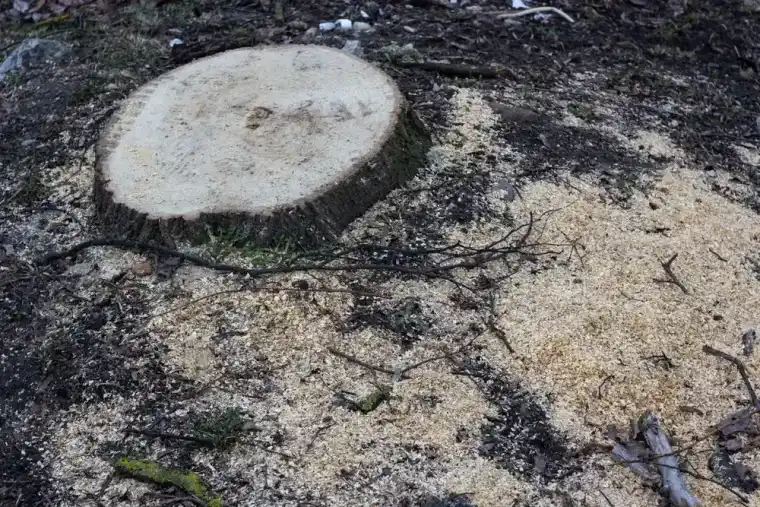
Stump Grinding
Grinding the stump below grade so you can mow over it, replant, or lay sod.
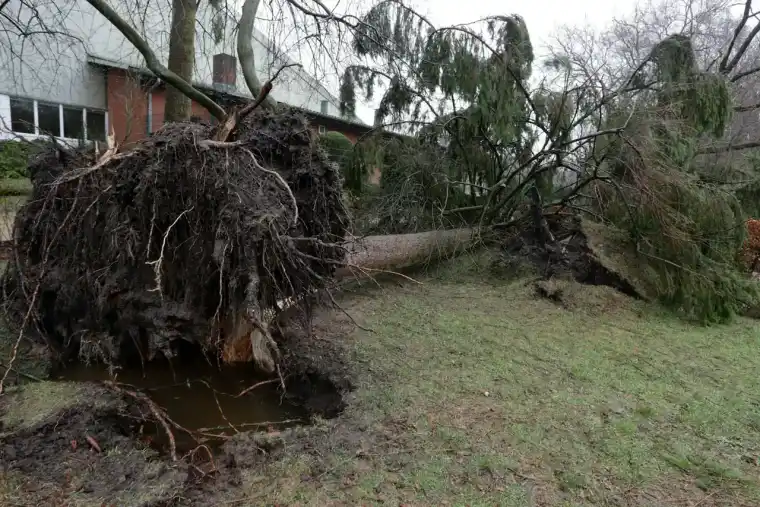
Emergency Tree Removal
A tree is on the house, across the drive, or leaning on a line. Call, do not fill out a form.
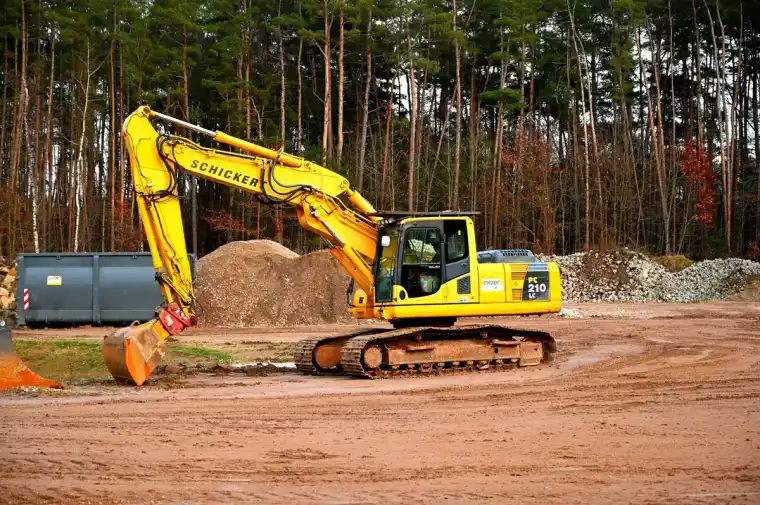
Land Clearing
Clearing acreage of trees, brush, and cedar so the ground can be used.
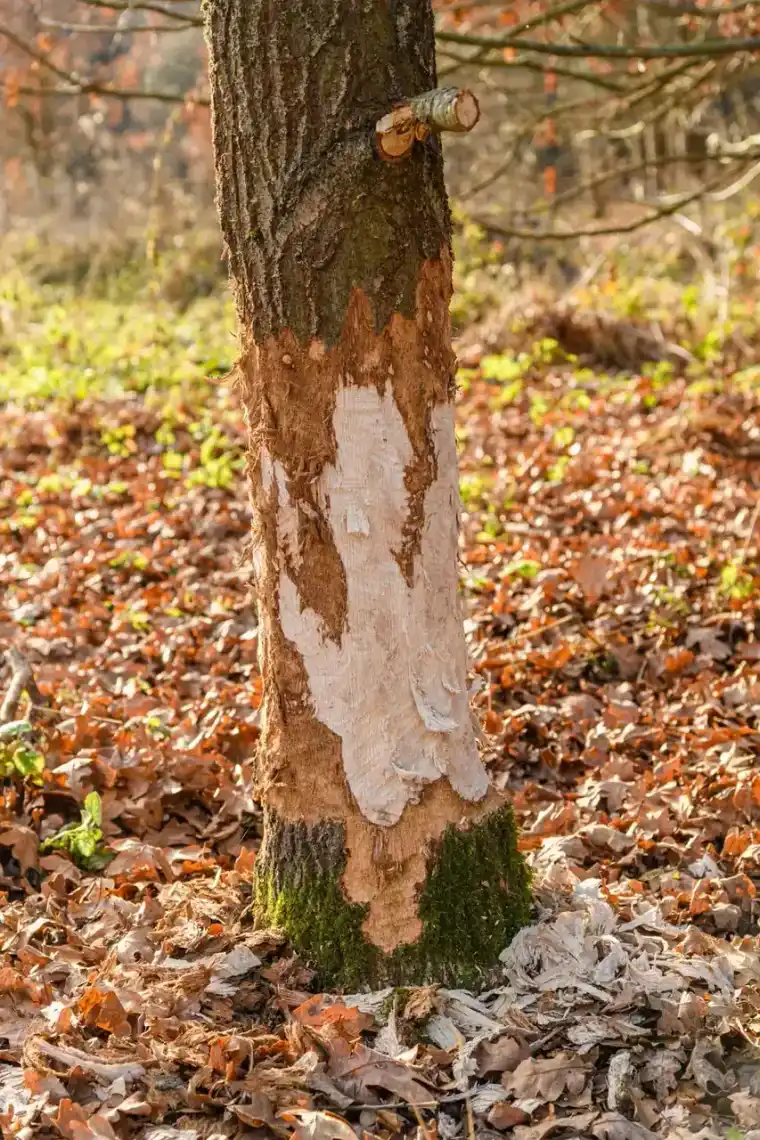
Hazard Tree Evaluation
A written evaluation of whether a specific tree is likely to fail, and what to do about it.
Lecompton's code asks you to call before you cut
The trees article in Lecompton's city code is two sections long, and the second one is unusual enough to be worth knowing. Before removing any tree adjacent to or overhanging a public area, the property owner is directed to contact the governing body in order to determine the appropriate safety measures for protecting public infrastructure and utility lines. That is not a permit, and there is no application form waiting for you. It is a call-first rule, and it exists because in a town this size the utility lines and the road are usually within reach of the same tree.
The first section is the standard owner duty: deal with any dead, diseased, or dangerous tree, or broken and decayed limbs that create a menace to public safety, and clear tree debris that ends up in a public right of way, street, or alley. The code posted online carries a draft label, so confirm current language with the city clerk before you rely on anything specific. That is a genuine caution, not a hedge.
- Contact the governing body before removing a tree next to or over a public area
- Owners are responsible for dead, diseased, or dangerous trees and for decayed limbs
- Debris that lands in a street, alley, or right of way is the owner's to clear
- Verify code language with the city clerk, since the online version is marked as a draft
Bluff on one side, bottom on the other
Lecompton was founded on a bluff along the south bank of the Kansas River, and that single fact drives most of what makes tree work here different. On the bluff, mature hardwoods grow on slopes steep enough that a bucket truck cannot be set safely, which means a climber and a rigging plan, or a crane parked well back with a long reach. Below the bluff, the bottom ground floods. The river gauge here is watched closely enough that flood impacts are published by stage: around 23.8 feet, Lecompton Road north of the river goes under, and by 26 feet the railroad tracks along the south bank do.
Those two settings need different quotes. A slope job is priced on rigging, anchor points, and how far the wood has to travel uphill. A bottom job is priced on ground conditions, since a saturated field will not hold a chip truck and the alternative is dragging everything to hard surface. We walk both before we put a number on anything, and on the bluff properties we generally will not quote from photographs at all.
Local hardwood has been coming off this ground since 1856
Constitution Hall was built in Lecompton in 1856 out of native cottonwood and black walnut, cut at a steam sawmill on the Kaw. It is the oldest wood-frame civilian structure still standing on its original site in Kansas. That is not a decorative fact for a tree service. It is a reminder that the black walnut growing on these slopes has been worth something other than firewood for a very long time.
So when a large walnut has to come out here, we ask before we buck it. A straight walnut butt log with no metal in it is worth keeping in sawlog lengths for a local mill rather than reducing to stove wood, and that decision has to be made before the saw touches it. Cottonwood and hackberry go to chips or firewood. Osage orange and redcedar off the fence lines are the best firewood on the property and burn hotter than anything else that grows here.
Booking work in Lecompton
Lecompton is about 20 minutes northwest from Lawrence and sits on our regular route through Douglas County. We run Topeka the same week. Estimates are free for tree removal and land clearing, you do not need to be home, and the written quote goes out the same day.
Lecompton tree service questions
Do I need permission from the city to remove a tree in Lecompton?
The code does not create a removal permit, but it does direct owners to contact the governing body before removing a tree adjacent to or overhanging a public area, so the appropriate safety measures for infrastructure and utility lines can be determined. For a tree in the middle of your yard well away from the road, that provision is not aimed at you. City Hall can tell you which case applies in about two minutes.
Why do bluff properties cost more to work?
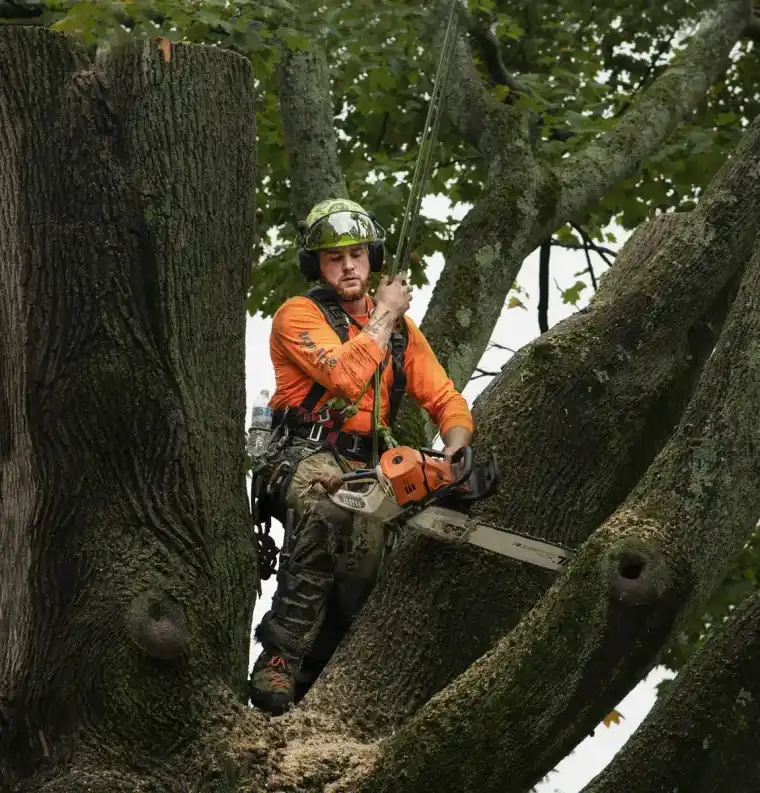
Because equipment access disappears. On a slope steep enough to rule out setting outriggers, the work moves to a climber with a rigging system, or to a crane positioned far enough back to need significantly more reach. Both take longer and carry more setup. Wood also has to move uphill to reach a truck, and drag distance uphill is not the same work as drag distance across a lawn.
Can I keep the walnut?
Yes, and you should tell us before we start. Walnut cut into firewood lengths is worth a fraction of what the same butt log is worth in sawlog lengths to a mill. We will leave logs on site at the lengths you want if the access allows a loader to reach them. That decision has to be made before the first cut, not after.
The river came up and my yard flooded. What should I watch?
Watch the base of every large tree for soil that has cracked or heaved on the side opposite any lean. Watch for leaves that thin out or color early in the following growing season, which signals root loss from oxygen starvation. Both are slow signals. Neither shows up during the flood itself, and both are worth having looked at before the next windy spring.
Do you handle acreages outside town?
Yes. Much of the work in this area is on ground outside city limits, where the ordinance does not reach and the constraints are the driveway, the overhead line, and the slope. Douglas County has its own open burning rules if you were planning to dispose of brush that way, which is worth checking before you build the pile.
How far is Lecompton from Lawrence?
About twenty minutes northwest. Close enough that we do storm work here rather than routing it, which on a bluff property matters, because a leaning tree above a house on a slope is a situation that does not improve with time.
Do you actually work in Lecompton?
Yes. Lecompton is about 20 minutes northwest from Lawrence, and it is on our regular route through Douglas County. We also run Topeka the same week.
What kinds of trees do you deal with in Lecompton?
Mostly Bur oak, Hackberry, Cottonwood, and eastern redcedar. River bluff properties along the Kaw with mature hardwoods on slopes. Steep access is common, which is what decides whether a job needs a crane or a climber. Those species drive tree removal and tree trimming here.
How fast can you get to Lecompton after a storm?
After a widespread wind or ice event every crew in Douglas County is booked within hours, so we triage by hazard. Trees on houses are emergency tree removal. Blocked drives come next. Storm damage cleanup follows once nothing is under tension. Call and we will give you a real window rather than a hopeful one.
Is the estimate free?
Yes, and you do not need to be home. We walk the property for tree removal, stump grinding, or land clearing, take measurements, and send the written quote the same day.
Free estimate in Lecompton
Free, no obligation. We call back within 15 minutes.
Got it.
We call back within 15 minutes during business hours.
That did not send. Call and we will take it down over the phone.
(785) 371-4859What you can hold us to
Four things we put in writing
These four lines go on every quote. If you want a reference first, call and ask. We will give you a name and a number.
-
Written price before we start
If we find rot or a hazard once the work starts, we stop and call you before anything changes.
-
Your property gets protected
Plywood and mats over turf. Drop zones planned around what sits underneath. After rain we come back another day rather than rut a wet lawn.
-
We leave it clean
Chips, limbs, and rounds go with us. The work area gets raked and blown down before the truck leaves. If you want the stump gone, that is a separate stump grinding line.
-
The wood from your tree stays if you want it
Say so before we start and the trunk gets cut into rounds and stacked. No charge.
Want a reference before you book? Call and ask . We will give you a name and a number.
What happens next
What happens after you write us
A written number before anyone touches a saw. The first step takes about 45 seconds.
-
Tell us about the tree
Three questions, about 45 seconds. Or call and skip the form.
-
We come look at it
We walk the property, check access, and write the quote on site. Free. You do not need to be home. Same visit for tree removal and stump grinding.
-
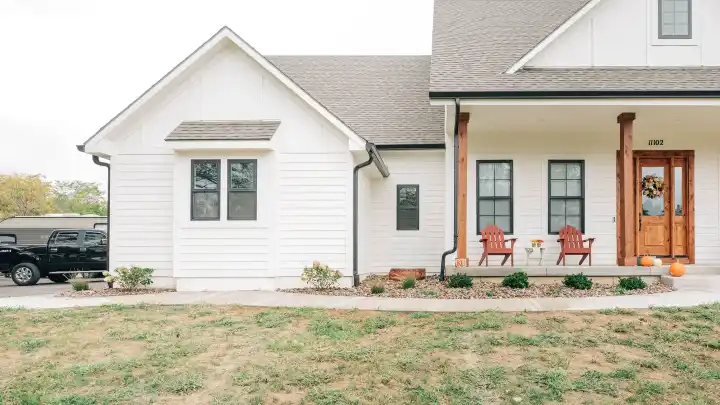
We do the work and clean up
The crew arrives in the window we quoted. Chips, limbs, and debris leave with us unless you want them kept. A pile already on the ground is debris hauling.
In a hurry? Call (785) 371-4859 and skip all three.
Tree work in and around Lecompton
Other towns we cover
Coverage
Lawrence, Topeka, and everything between
We cover 14 towns across 5 counties. If your town is not pinned, call anyway. We are usually closer than you think.
- Home base
- 2229 Marvonne Rd
Lawrence, KS 66047 - Hours
- Mon to Fri