
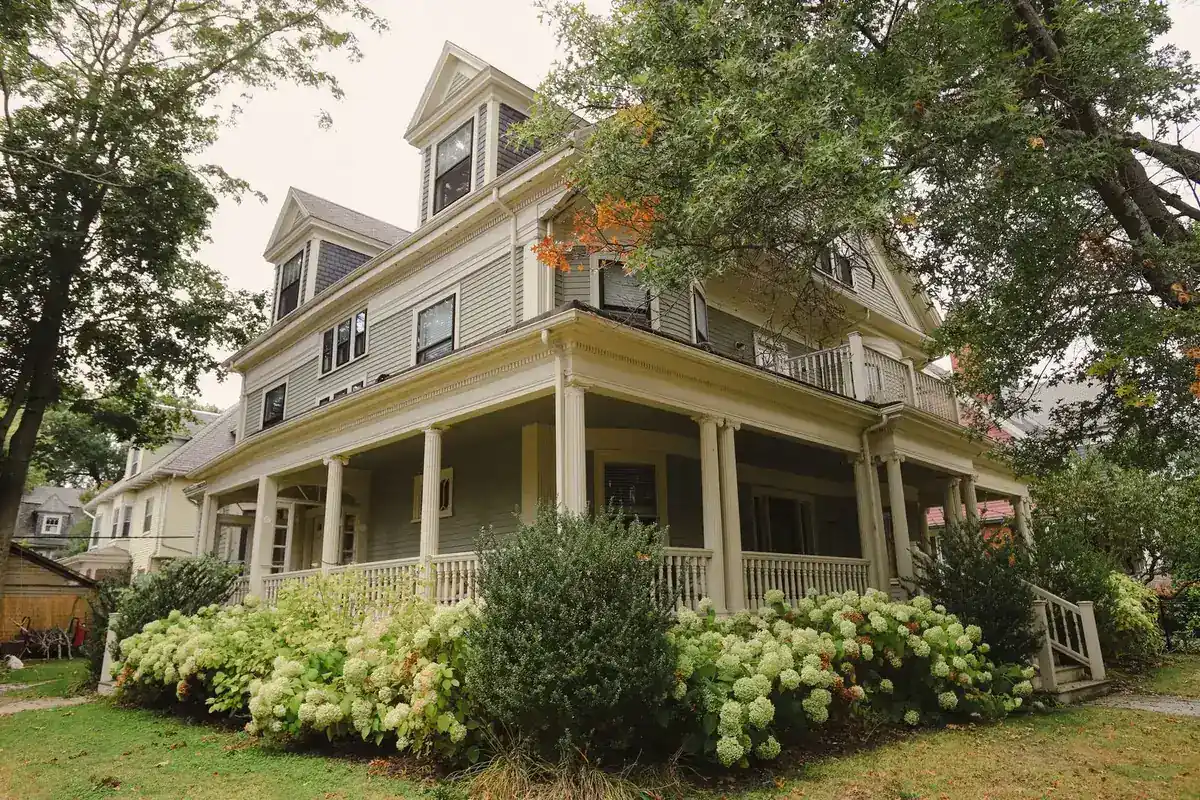
Shawnee County, Kansas
Tree Service in Topeka, KS
Topeka neighborhoods west of Gage and out toward Auburndale are heavy with silver maple and Siberian elm planted in the postwar years. Both are fast growers with weak branch unions, and both are the trees most likely to drop a limb in a June thunderstorm.
Free written estimates · Cleanup included · Monday to Friday, 8 to 5
Serving Topeka
What we get called for in Topeka
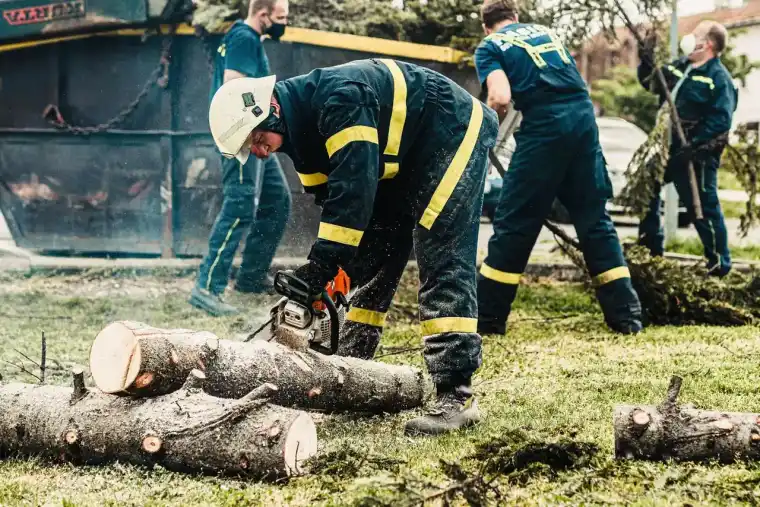
Tree Removal
Taking down a tree safely when it is dead, dying, or growing somewhere it cannot stay.
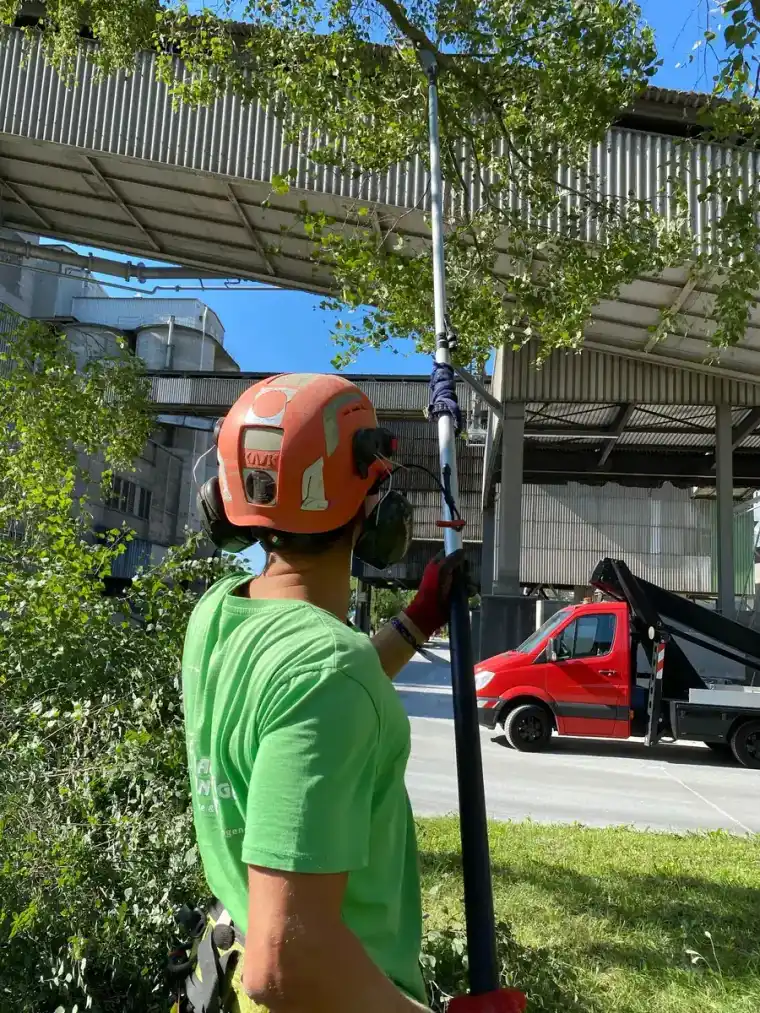
Tree Trimming
Clearing limbs off roofs, driveways, and power drops, and thinning canopies before storm season.
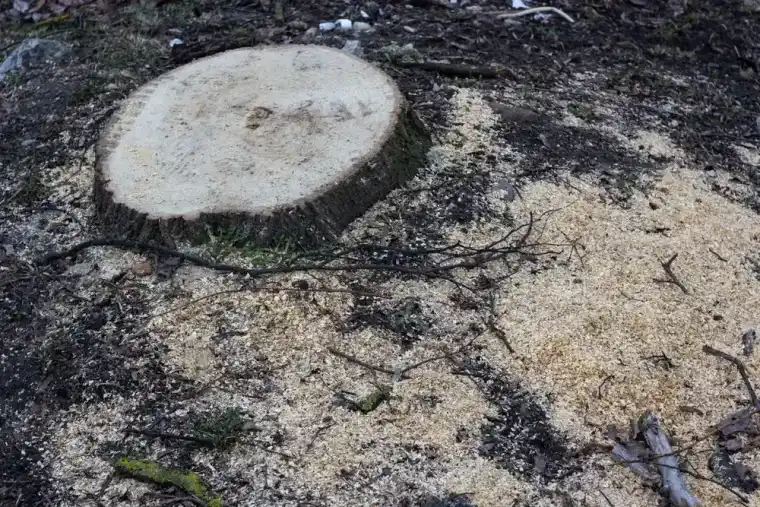
Stump Grinding
Grinding the stump below grade so you can mow over it, replant, or lay sod.
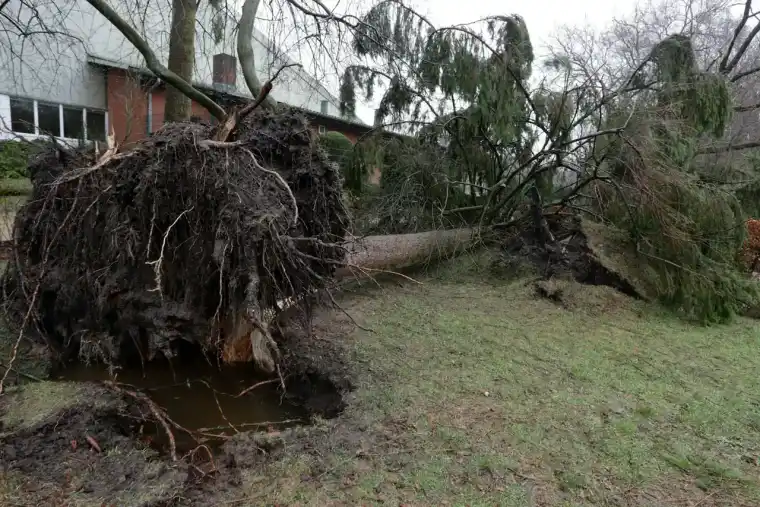
Emergency Tree Removal
A tree is on the house, across the drive, or leaning on a line. Call, do not fill out a form.
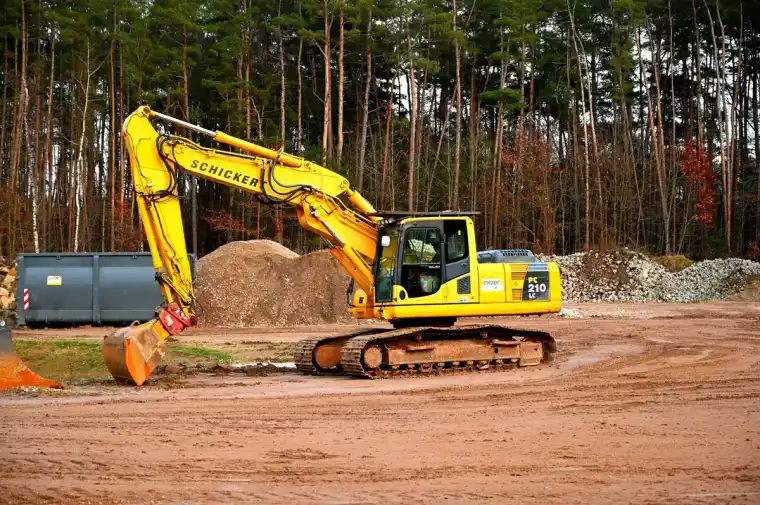
Land Clearing
Clearing acreage of trees, brush, and cedar so the ground can be used.
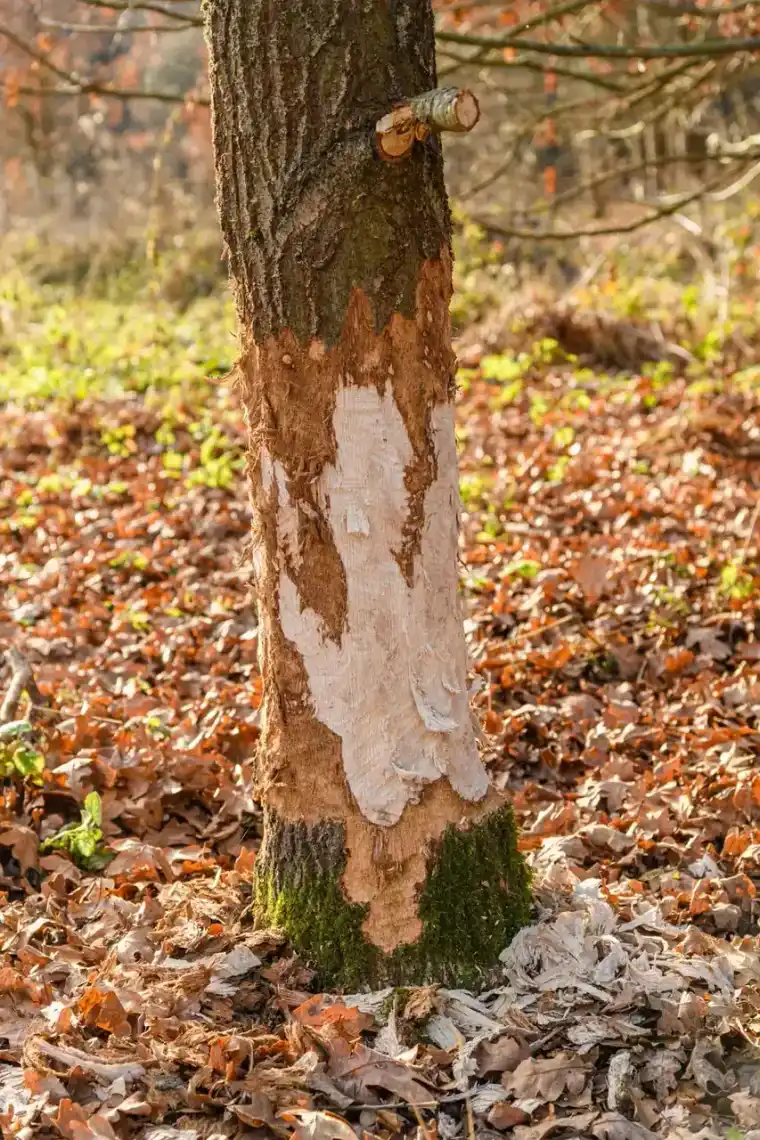
Hazard Tree Evaluation
A written evaluation of whether a specific tree is likely to fail, and what to do about it.
The same Lawrence crew works Topeka the same week, about a 30 minute drive west. Call (785) 371-4859 . Yard address: 2229 Marvonne Rd, Lawrence, KS 66047. Monday to Friday, 8:00 AM to 5:00 PM.
Tree removal in Topeka
Topeka removals are often silver maple and Siberian elm with weak unions after a June storm. Open-yard trees and trees over a roof are different jobs. The method is on the tree removal page. After a wind event, emergency tree removal goes first in the weekday queue.
Tree trimming in Topeka
West-side Topeka silver maples need tree trimming more than topping. Late winter for most hardwoods. Oaks stay in the dormant season because of oak wilt. A tree that already failed is emergency tree removal, not a trim.
What Topeka's forestry chapter actually controls
Topeka runs tree work through Chapter 12.65 of the municipal code, and the split is cleaner than most people expect. Nobody may plant, set out, maintain, protect, spray, fertilize, treat, trim, prune, or remove any tree, hedge, bush, shrub, or vine on public property without first securing a permit from the Division of Forestry, and that permit can be issued, issued with conditions, or denied outright. The Division works under the City Forester, who administers everything standing on public ground.
Private property gets handled from the other direction. Owners abutting a street or alley have a duty to clear vegetation in that street or alley when the City Forester determines it impedes travel. Separately, when the City Forester finds a tree or shrub on private property that is a hazard to travel on public streets, sidewalks, or alleys, or that is infected or infested with disease or insect pest, the owner receives written notice to abate. If the owner does not act, the city may do the work and assess the cost against the property. The practical version: a dying tree leaning over a public sidewalk becomes your tree removal bill either way, and it is cheaper on your calendar than on the city's.
- Public property tree work needs a Division of Forestry permit before anything starts
- The City Forester can order treatment or removal of hazardous or infested trees on private ground
- An ignored notice can end with city crews doing the work and the cost assessed to the property
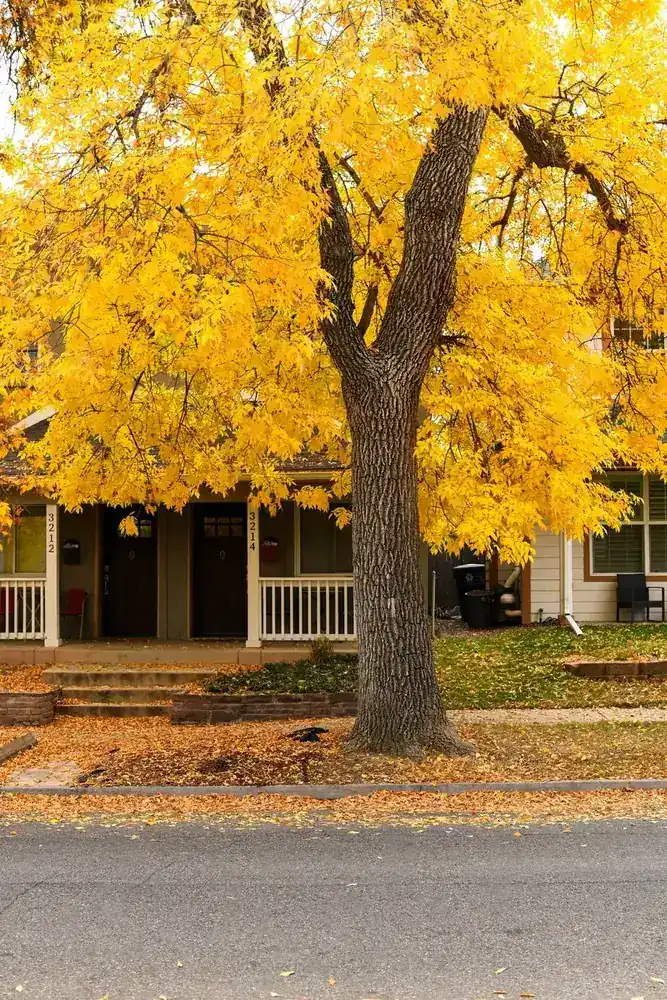
Potwin, and neighborhoods laid out around their trees
Potwin Place went on the National Register in 1980. It traces to 1869, when Charles Wolcott Potwin bought roughly seventy acres and platted two hundred-foot-wide avenues with more than two hundred elms planted along them and circular parks set at the intersections that traffic still has to steer around. Woodlawn keeps its brick surface. Greenwood was paved over in asphalt.
Those circles, the deep setbacks off stone curbs, and the quarter-acre lots change how a crew works. There is often no straight shot from the trunk to a truck, and the staging spot that works on an ordinary Topeka street does not exist here. That is tree removal as a rigging job. The original elms are long gone, which matters for a different reason: what stands in Potwin and the older west-side blocks now is a later planting, and much of it went in during the same short stretch of years. Trees planted together also decline together.
The 1966 tornado is still shaping the canopy
On June 8, 1966, an F5 formed in the southwest corner of Shawnee County, crossed Burnett's Mound, and ran roughly twenty-two miles northeast through the most heavily populated part of Topeka and across the Washburn University campus. Seventeen people died, more than eight hundred homes were destroyed, and every building on the Washburn campus was damaged. It took the giant elms Washburn was known for, and the line of younger trees standing where they were is the marker for the path. That planting wave is why tree trimming and tree removal still dominate Topeka work.
The rebuild is why so much of central and west Topeka carries trees of a single age. Replanting after 1966 leaned on species that throw shade quickly, and in this part of Kansas that meant silver maple and Siberian elm stacked on top of the postwar plantings already in the ground. Both grow fast, both form branch unions with included bark, and both shed limbs in a June thunderstorm rather than bending through it. A silver maple with a tight union and a co-dominant stem is a candidate for cabling and bracing and a crown reduction long before it is a candidate for tree removal, but only if somebody looks before the split rather than after.
- Co-dominant stems with included bark are the failure point on most Topeka silver maples
- Crown reduction lowers the lever arm on a heavy limb. Topping does not, and the regrowth is weaker.
- Cabling buys years on a structurally poor tree that is otherwise healthy and worth keeping
Ash, wet ground, and the rest of the Topeka calendar
Emerald ash borer was confirmed in Shawnee County in 2017, after a local arborist flagged it and inspectors found galleries and pulled a live adult out of an urban Topeka tree. Every untreated ash in the city is now on a schedule set by the beetle rather than by the owner. Take it down as tree removal while it still holds a climber, then stump grinding. Ash removed with a live crown can be climbed. Ash removed two years dead is brittle work that usually needs a lift.
Water is the other Topeka variable. The 1951 flood put water over North Topeka and Oakland at depths from five to twenty-five feet, and Shunganunga Creek flooded again in 2007, which is why the city and the Corps of Engineers have been widening channel and building levee along it since. On low ground near the Shunga and the Kansas River, saturated soil is what lets a root plate rotate. A tree that fails there often has a sound trunk and simply loses its grip. Add the rules that hold anywhere in northeast Kansas: no oak pruning April through July because of oak wilt, and any Scots pine killed by pine wilt down and chipped or burned before May 1.
Booking work in Topeka
Topeka is about 30 minutes west from Lawrence and sits on our regular route through Shawnee County. We run Topeka the same week. Estimates are free for tree removal and land clearing, you do not need to be home, and the written quote goes out the same day.
Topeka tree service questions
Do I need a City of Topeka permit to remove a tree in my back yard?
The permit requirement in the forestry chapter applies to work on public property, not to tree removal on your own lot. Two things can still pull the city in: whether the trunk is inside the right of way rather than on your side of the line, and whether the job needs the street for staging or a lane closure. We sort out which of those applies before quoting.
The City Forester sent me a notice about a tree. What happens now?
A written notice to abate means the city has determined the tree is either a hazard to travel on a public street, sidewalk, or alley, or is infected or infested. You act, or the city may do the work and assess the cost against the property. Getting somebody out to look at the tree early is usually the difference between scheduled tree removal and emergency tree removal at a price you did not set.
Can I burn the brush pile after you leave?
In Shawnee County, essentially every outdoor fire requires an open burning permit, with cooking fires in a grill or similar container as the exception. Fire districts issue them, and some issue long-term permits in person. Most of our Topeka customers skip the question entirely and book debris hauling or chipping, since the chips leave with us the same day.
My silver maple split down the middle in a storm. Is it a total loss?
Sometimes, and often not. What matters is where the split runs. A failure that opens the main union and travels into the trunk generally ends the tree. A single co-dominant stem that tore out while the rest of the crown stayed intact can frequently be cleaned up with tree trimming, reduced with crown reduction, and watched. The wound is only half of it. The other half is what the remaining unions look like.
Is it worth treating an ash tree in Topeka, or has that window closed?
It depends on the individual tree. Shawnee County has had confirmed emerald ash borer since 2017, so by now most untreated ash in the city carries some infestation. An ash with a full crown and no significant dieback is still a legitimate treatment candidate. An ash that has thinned at the top, has splitting bark, or shows woodpecker work has usually lost enough vascular tissue that treatment is money spent on tree removal you will still be paying for.
You are based in Lawrence. How does that work for Topeka storm calls?
Topeka sits about thirty minutes west on I-70, and it is a market we run in weekly rather than occasionally. On storm calls that drive is usually shorter than the wait for a local crew already committed to three other addresses. The first visit is emergency tree removal. Storm damage cleanup follows once nothing is loaded.
Do you actually work in Topeka?
Yes. Topeka is about 30 minutes west from Lawrence, and it is on our regular route through Shawnee County. We also run Topeka the same week.
What kinds of trees do you deal with in Topeka?
Mostly Silver maple, Siberian elm, Honeylocust, Green ash, Eastern redcedar, and cottonwood. Topeka neighborhoods west of Gage and out toward Auburndale are heavy with silver maple and Siberian elm planted in the postwar years. Both are fast growers with weak branch unions, and both are the trees most likely to drop a limb in a June thunderstorm. Those species drive tree removal and tree trimming here.
Do I need a permit to remove a tree in Topeka?
Private property trees are generally the owner's call, and right of way and parkway trees are handled by the city. Topeka's municipal code was not reachable to verify the specifics, so confirm with the city before removing anything near the street. Private-yard tree removal is usually on you. Street trees go to the city. The Lawrence and Topeka pages walk the local rules.
How fast can you get to Topeka after a storm?
After a widespread wind or ice event every crew in Shawnee County is booked within hours, so we triage by hazard. Trees on houses are emergency tree removal. Blocked drives come next. Storm damage cleanup follows once nothing is under tension. Call and we will give you a real window rather than a hopeful one.
Is the estimate free?
Yes, and you do not need to be home. We walk the property for tree removal, stump grinding, or land clearing, take measurements, and send the written quote the same day.
Free estimate in Topeka
Free, no obligation. We call back within 15 minutes.
Got it.
We call back within 15 minutes during business hours.
That did not send. Call and we will take it down over the phone.
(785) 371-4859What you can hold us to
Four things we put in writing
We are new to Google, so we are not going to point at a review count we have not earned yet. These are the commitments that show up on every quote instead.
-
Written price before we start
If we find rot or a hazard once the work starts, we stop and call you before anything changes. Same rule on tree removal and tree trimming.
-
Your property gets protected
Plywood and mats over turf, drop zones planned around what is underneath, and we reschedule instead of rutting a wet Lawrence or Topeka lawn.
-
We leave it clean
Chips, limbs, and rounds go with us. The work area gets raked and blown down before the truck leaves. A leftover pile is debris hauling. The stump is stump grinding if you want it gone.
-
The firewood is yours if you want it
Say so before we start and the trunk gets cut into rounds and stacked instead of leaving on the truck. No charge. That is part of a tree removal quote, not a separate surprise.
Want a reference before you book? Call and ask . We will give you a name and a number.
What happens next
Three steps, and the first one takes 45 seconds
No sales visit, no pressure, and a written number before anyone touches a saw.
-
-
We come look at it
We walk the property, check access, and write the quote on site. Free, and you do not need to be home. Tree removal, tree trimming, and stump grinding all get quoted that way.
-
We do the work and clean up
Crew arrives in the window we quoted. Chips, limbs, and debris leave with us unless you want them kept. Storm jobs follow emergency tree removal first, then cleanup.
In a hurry? Call (785) 371-4859 and skip all three.
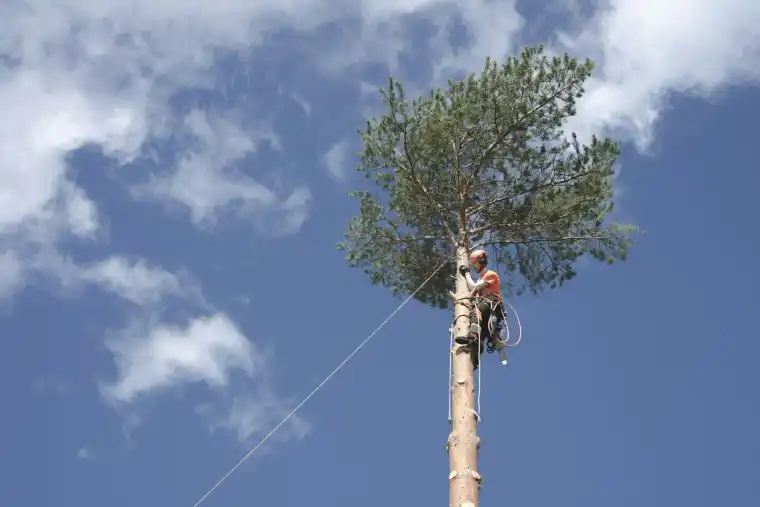
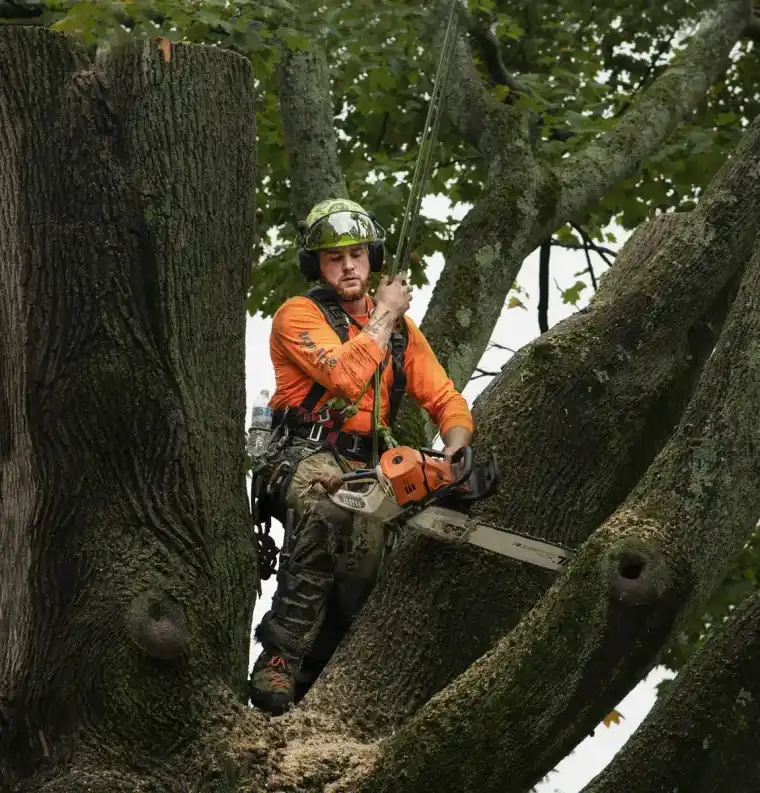
Tree work in and around Topeka
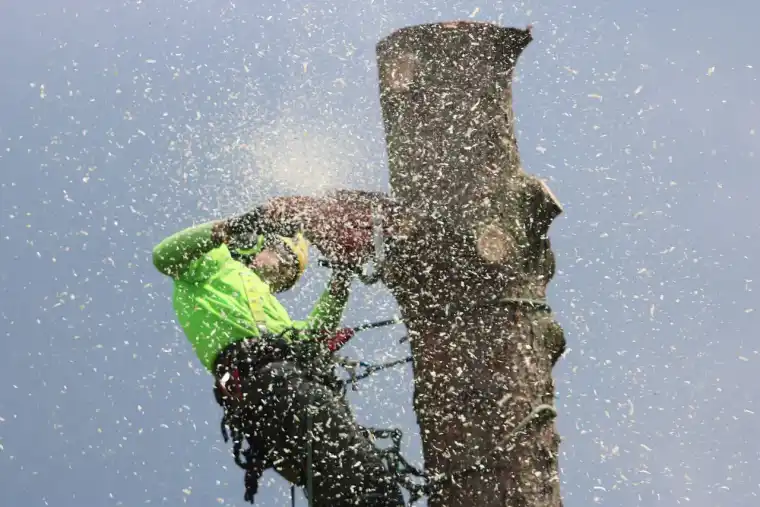
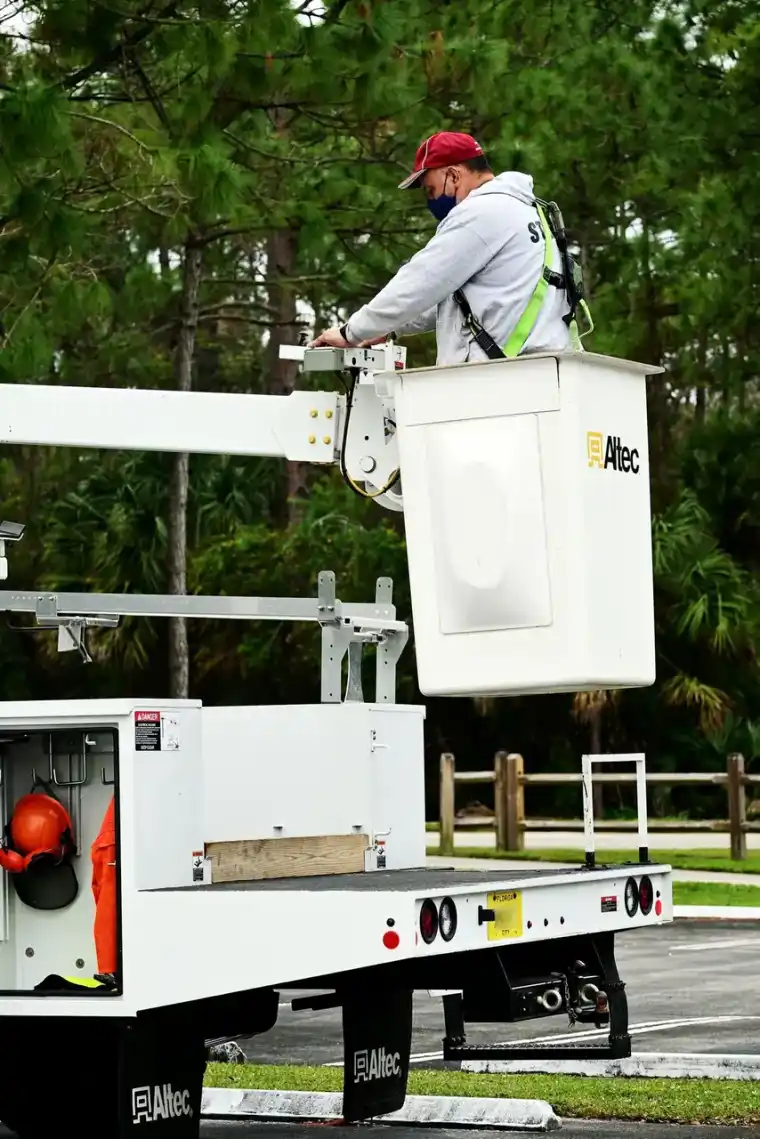
Other towns we cover
Coverage
Lawrence, Topeka, and everything between
We cover 14 towns across 5 counties. If your town is not pinned, call anyway. We are usually closer than you think.
- Home base
- 2229 Marvonne Rd
Lawrence, KS 66047 - Hours
- Mon to Fri