
Prioritised ahead of scheduled work
Storm Damage Cleanup in Lawrence and Topeka
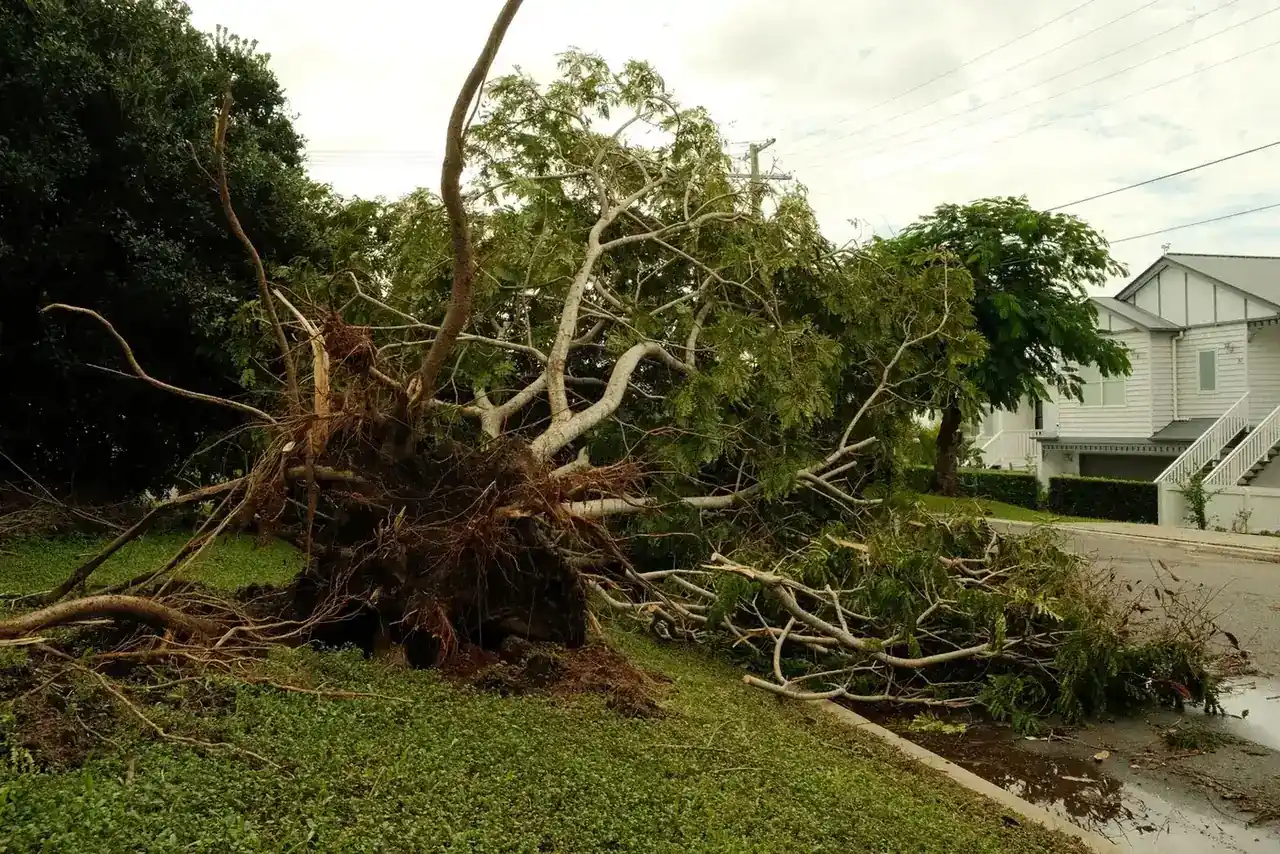
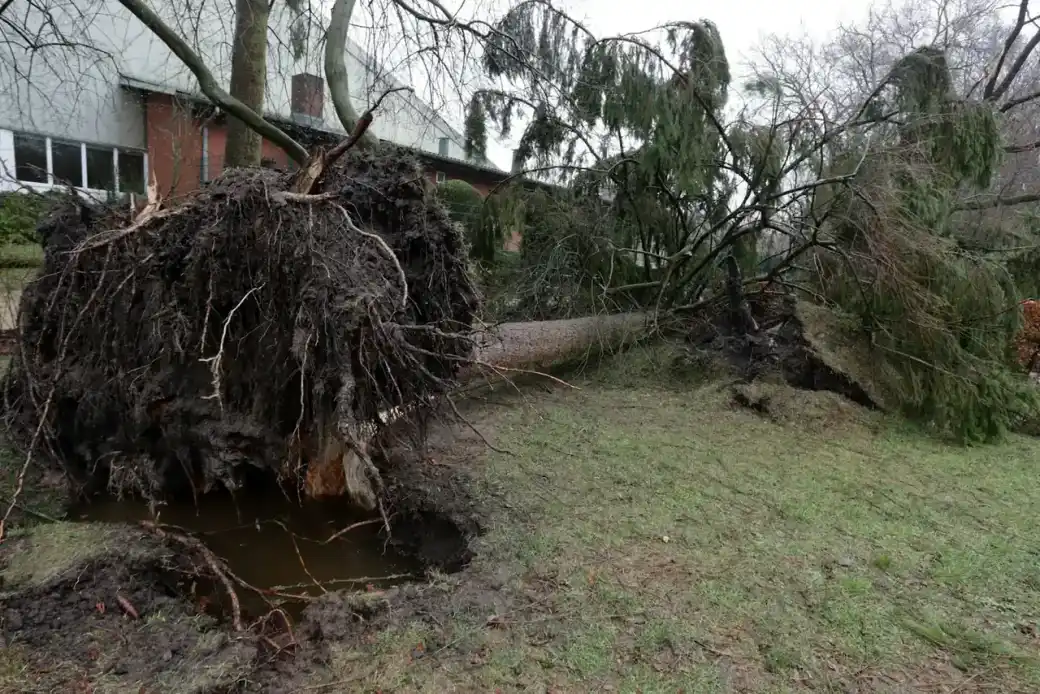
The dangerous part of a storm is usually what is still in the tree. Hangers, limbs broken but caught in the canopy, come down later without warning and they come down on whatever is underneath. After a straight-line wind event in Lawrence or Topeka the work is to get the hangers out, cut back the torn limbs to a proper cut so the wounds can close, and clear the ground.
Free written estimates · Cleanup included · Monday to Friday, 8 to 5
What the job includes
- Hangers and broken limbs removed from the canopy
- Torn and split limbs cut back to a clean cut instead of left ragged
- Debris cleared from drives, yards, fences, and roofs
- An honest assessment of which damaged trees are worth keeping
The First Ten Minutes After It Passes
The wind stops before the storm is over. Second and third cells run behind the first one across northeast Kansas, and the tree that is standing when you step outside may not be standing in twenty minutes. Wait for the whole system to clear before you walk the property.
When you do walk it, walk with your head up. The material that hurts people after a storm is not on the ground, it is thirty feet over it, hung in a canopy and waiting for one more gust. Work through the list below before you drag a single limb.
Photograph before you clean. Insurance pays for what it can see, and a yard that has already been raked is a yard with no evidence in it.
- 1 Wait until the whole system has passed, not only the first cell.
- 2 Look up from the edge of the yard before you step under any canopy. Broken limbs caught in the crown are the single most common cause of injury after a storm.
- 3 Walk the property line and the street looking for downed conductors. Assume every wire is live and call Evergy at 800-544-4857 if you find one.
- 4 Check your roof from the ground with a phone zoom or binoculars. Do not go up a ladder to look at storm damage.
- 5 Photograph everything before you move it. Wide shots of the whole property, each damaged tree, each damaged structure, and debris exactly where it landed.
- 6 Open the insurance claim and write down the claim number.
- 7 Clear only what is on the ground, under no tension, and light enough to move without a saw.
- 8 Call for anything overhead, anything pinned or bent, anything on a structure, and anything you would need a ladder to reach.
Hangers Are the Part That Hurts People
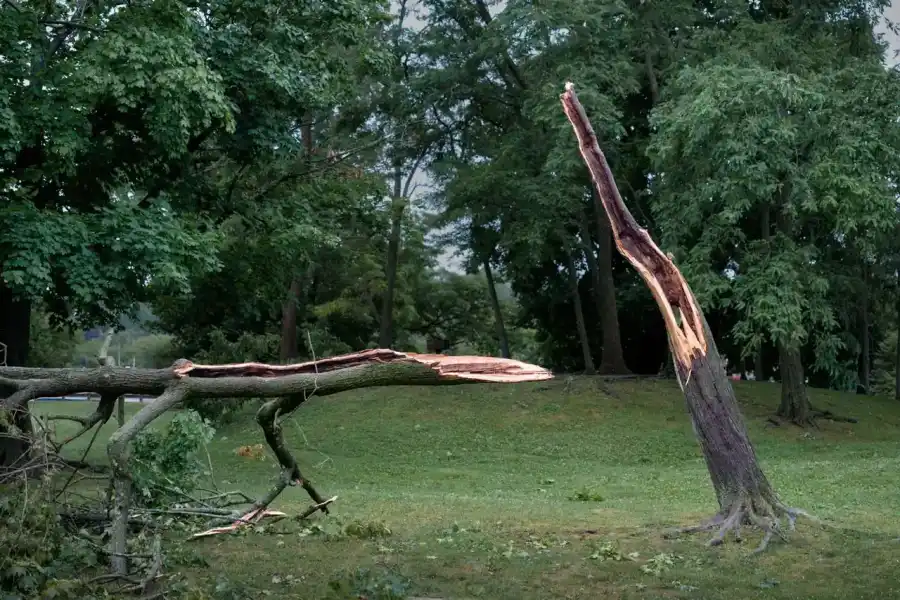
A hanger is a limb that broke but stayed in the tree, caught on another branch or hinged by a strip of bark. It is not stable and it is not on a schedule. It comes down on a still day a week later, on whatever is underneath, which in most Lawrence and Topeka yards is a driveway, a patio, or a swing set. That is emergency tree removal if it is still on the house, and this page if it is still in the canopy.
Hangers are also the reason storm cleanup is a climbing job rather than a raking job. Getting one out means going up into a canopy that just failed, on wood you cannot fully trust, and rigging the piece down instead of shaking it loose. Silver maple and Siberian elm, planted across both cities after the war, produce more of them than anything else because their branch unions are weak and their wood is brittle.
The ground debris can wait a week without hurting anyone. The hangers cannot.
- Broken limbs lodged in the canopy removed and rigged down, not dropped
- Torn and stripped limbs cut back to a proper collar cut so the wound can close
- Split unions and cracked leaders identified while the crew is already in the tree
- Bark stripped down the trunk documented, since it often decides whether the tree is worth keeping
Ice and Wind Break Trees Differently
Kansas gets two storm seasons that damage trees, and they leave different wreckage. Spring and early summer bring straight-line winds, which load one side of a canopy hard and fast. That failure mode snaps trunks at weak co-dominant unions and tips whole root plates out of saturated ground. What you get is a small number of very large failures.
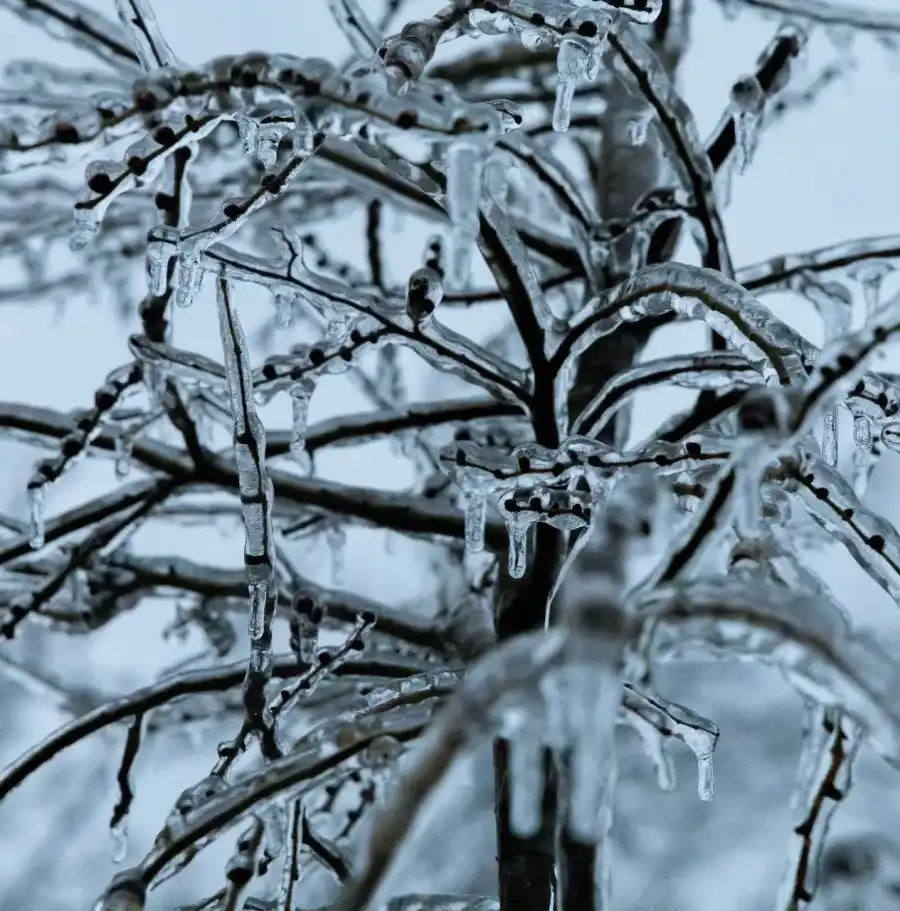
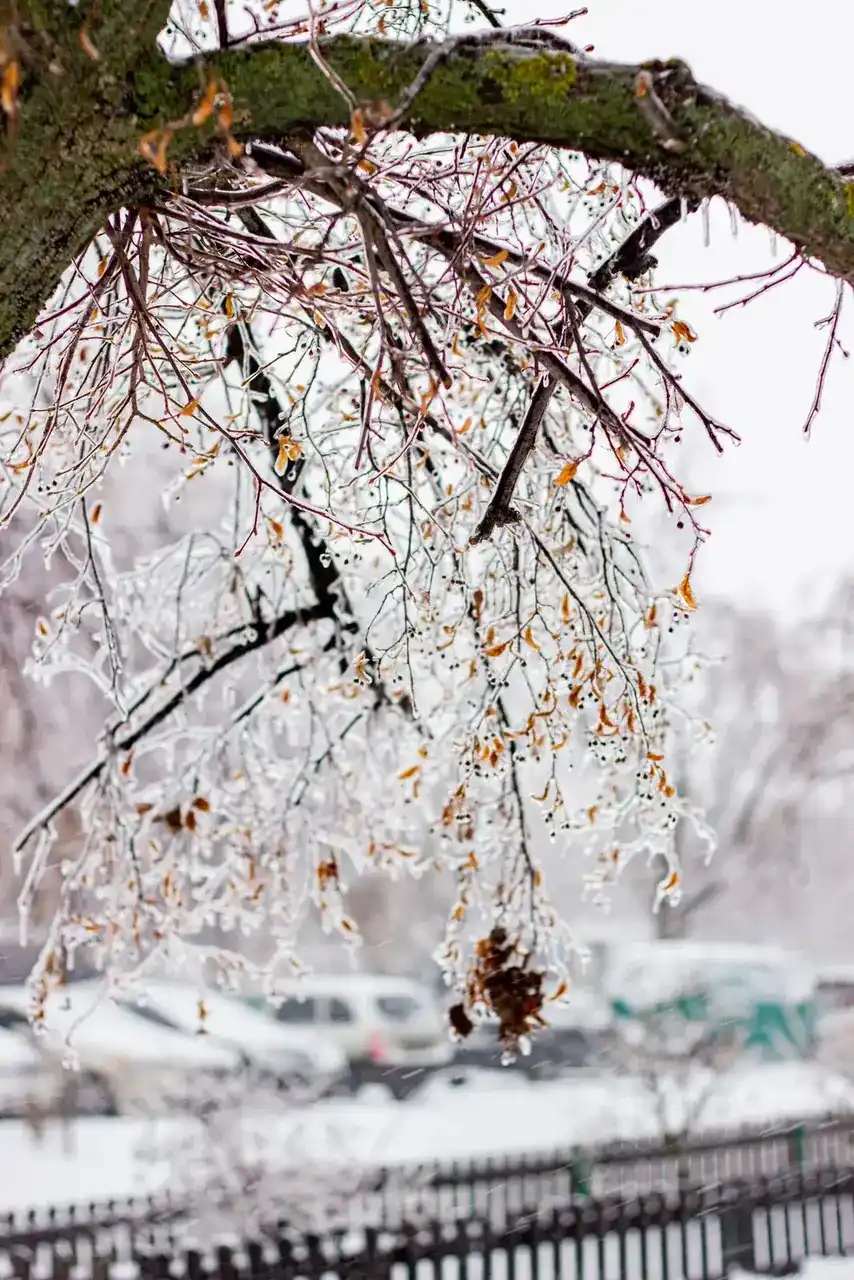
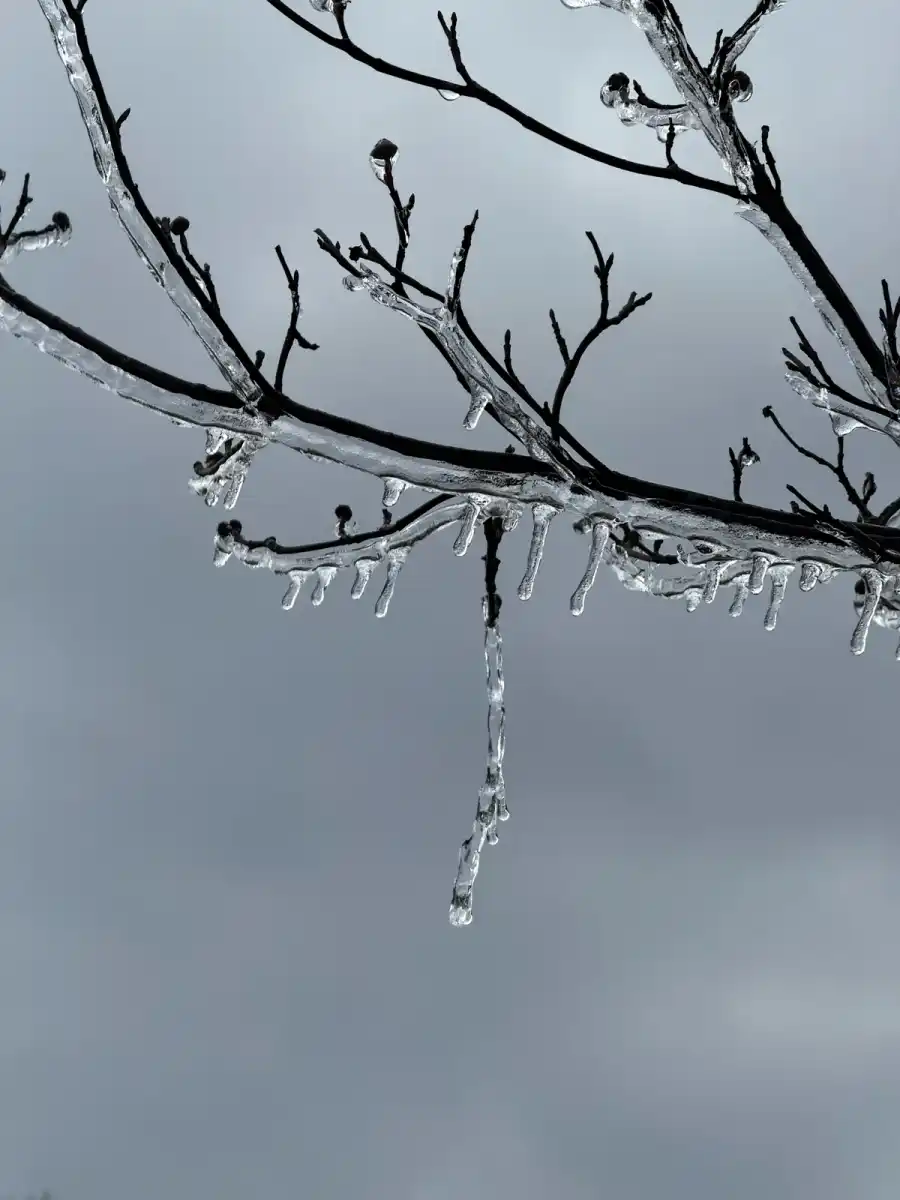
Winter ice loads the entire canopy evenly and from the inside out. Small diameter wood accumulates the most ice relative to its strength, so ice storms shred the fine structure of a tree and bring down a very large number of medium sized limbs. Hackberry, Siberian elm, honeylocust, and Bradford pear come apart first. Bur oak and hackberry with sound structure generally ride it out.
The cleanup differs accordingly. Wind damage is a removal or a large rigging job on a handful of trees. Ice damage is many hours of pruning across many trees, cutting ragged breaks back to points where the tree can actually seal the wound instead of leaving stubs to rot.
Which Damaged Trees Are Worth Keeping
A tree that lost less than roughly a third of its live canopy, with no trunk damage and an undisturbed root plate, usually recovers on its own with cleanup pruning. It will look thin for two seasons and then fill back in. Removing it is a waste of a mature tree.
The ones that do not recover are the ones with structural damage rather than canopy damage. A trunk split down a co-dominant union, a crack running vertically up the stem, or soil heaved on one side where the root plate lifted are all endings rather than injuries. So is losing the main leader on a young tree, though on a young tree replanting is cheap.
We will tell you which is which and we do not get paid more for saying removal. If the honest answer is that a bur oak with one torn limb needs a cleanup prune and nothing else, that is what goes on the estimate.
- Under about a third of canopy lost, trunk sound: usually keep and prune
- Split trunk or cracked main union: usually remove
- Root plate lifted, soil heaved, or a new lean: remove, and treat it as urgent
- Bark torn off a wide strip of trunk: assess, since a tree can survive damage on one face but not a girdling wound
- Ash already in decline from emerald ash borer: storm damage usually settles the question
Insurance and Storm Debris
The rule that surprises people is the same one that applies to any fallen tree. Homeowners policies generally cover removal when a tree or a large limb hits a covered structure, and generally do not when the same wood lands in the yard. A canopy full of broken limbs over an intact roof is usually a maintenance expense rather than a claim.
That makes the photographs matter more, not less. Shoot the debris where it fell, shoot the point of contact on the structure, and shoot the whole property wide so the adjuster can see the scale of the event. Do this before the first limb moves. Once the crew starts chipping, the evidence becomes mulch.
Ask your carrier about a debris removal allowance specifically. Several policies include a limited one that applies even when no structure was hit, and it is a line most homeowners never think to ask about.
What a Regional Event Does to the Schedule
After a widespread wind or ice event across Douglas and Shawnee counties, every crew with a bucket truck is committed within hours. There is no company in northeast Kansas that can be at every property the next morning, and any company telling you otherwise is either lying or planning to subcontract you to whoever answers.
We triage by hazard. Trees on occupied structures come first, then blocked access and blocked roads, then hangers over places people stand, then ground debris. If you are in the fourth category we will say so and give you a date rather than a maybe.
Storm work also brings out-of-state crews into Lawrence and Topeka within a day of any large event. Kansas has no state licensing requirement for tree removal companies, so a written price with the hauling and the cleanup spelled out is the protection available to you. Emergency and storm call-outs already run about fifty percent above scheduled work according to Today's Homeowner data for Topeka, Lawrence and Shawnee, and a door knocker with nothing in writing is rarely the one charging less.
What this costs and how long it takes
Storm work typically runs about 50 percent above the same job scheduled
Today's Homeowner city data for Topeka, Lawrence and Shawnee.
These are published cost ranges for Kansas and national industry averages, not a quote. Every tree is different, and the only way to know what yours costs is a free on-site look.
What moves it up or down
- Hard access or a tight spaceadds 25 to 50 percent
- Several trees on one visitsaves 10 to 25 percent per tree
- Peak season, summer into falladds 10 to 20 percent
- A crane is requiredadds $500 or more
- Permit, where one is needed$60 to $450
Storm Damage Cleanup questions
How fast can you get to me after a big storm?
It depends entirely on how widespread the event was. After an isolated cell we are usually out the same day. After a regional ice storm, every crew in northeast Kansas is booked within hours and we work by hazard: structures first, blocked access second, hangers over walkways third, ground debris last. We give you a real date.
My tree lost a big limb. Does the whole tree have to come out?
Usually not. A tree that lost under about a third of its live canopy with a sound trunk and an undisturbed root plate normally recovers with cleanup pruning. What does not recover is a split trunk, a cracked main union, or a root plate that has lifted the soil on one side.
Can I clean up the yard myself?
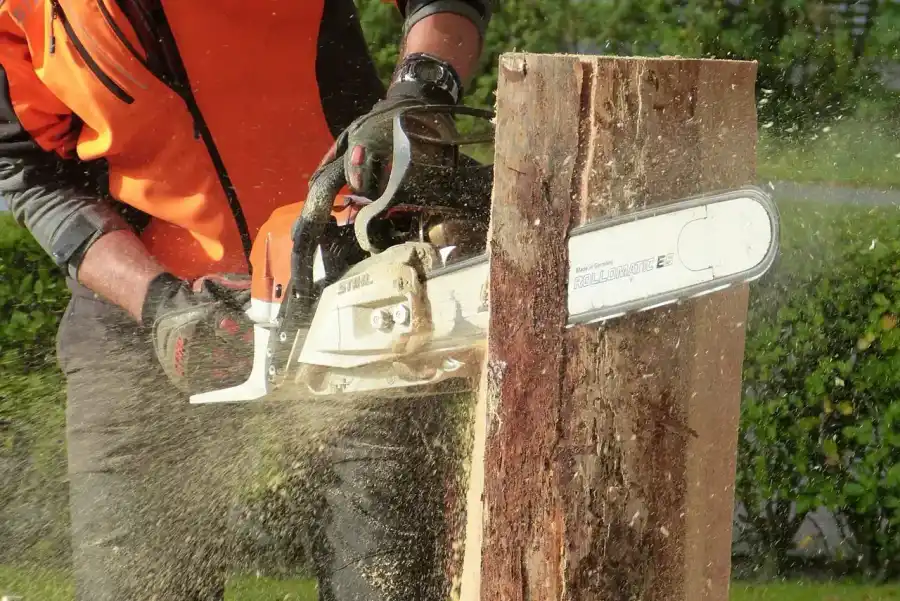
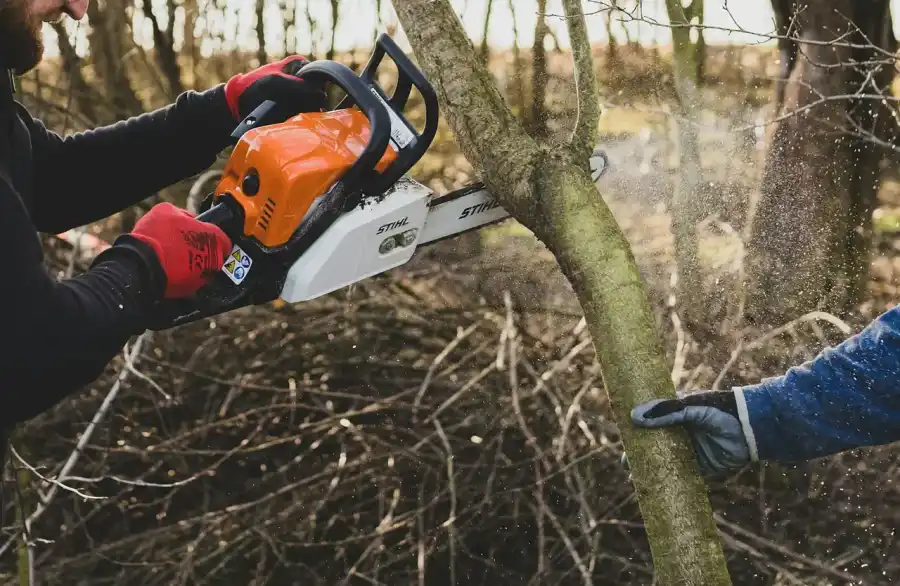
Ground debris under no tension, yes. Anything overhead, anything bent or pinned, anything on a structure, and anything requiring a ladder, no. Chainsaw injuries spike after storms because homeowners cut into limbs that are holding load and the wood moves in a direction they did not expect.
Should I photograph before I clean up?
Always, and before you move a single limb. Shoot wide from the street, then each damaged tree, then each damaged structure, then the debris where it landed. If you clean first, you have removed the only proof of what happened.
Will insurance cover storm cleanup?
Generally when a tree or limb hit a covered structure, generally not when the debris landed in the yard. Ask your carrier specifically about a debris removal allowance, since some policies include a limited one either way, and most homeowners never think to ask.
Why does storm work cost more than a scheduled job?
Crews taken off scheduled work, and cutting on damaged wood that has to be rigged rather than climbed normally. Today's Homeowner data across Topeka, Lawrence and Shawnee puts emergency and storm call-outs at roughly fifty percent above scheduled work, and that matches what we see.
Do ice storms and wind storms damage trees differently?
Yes, and it changes the repair. Wind loads one side of the crown and snaps trunks or tips root plates, which means a few very large failures. Ice loads the whole canopy and destroys the small diameter wood, which means a great many medium limbs down across many trees. Ice cleanup is more hours of pruning; wind cleanup is more removals.
A crew from out of state is going door to door in my neighborhood. Are they legitimate?
Some are, many are not, and Kansas gives you no help sorting them out because there is no state licensing requirement for tree removal companies. Get the scope and the price in writing before any cutting, ask whether hauling and cleanup sit inside that price, ask for a reference from a job like yours and call it, and never pay the full amount up front.
Request a free estimate
Free, no obligation. We call back within 15 minutes.
Got it.
We call back within 15 minutes during business hours.
That did not send. Call and we will take it down over the phone.
(785) 371-4859Tree down right now?
Call rather than filling out the form. We move storm work ahead of scheduled jobs.
(785) 371-4859Storm Damage Cleanup in progress
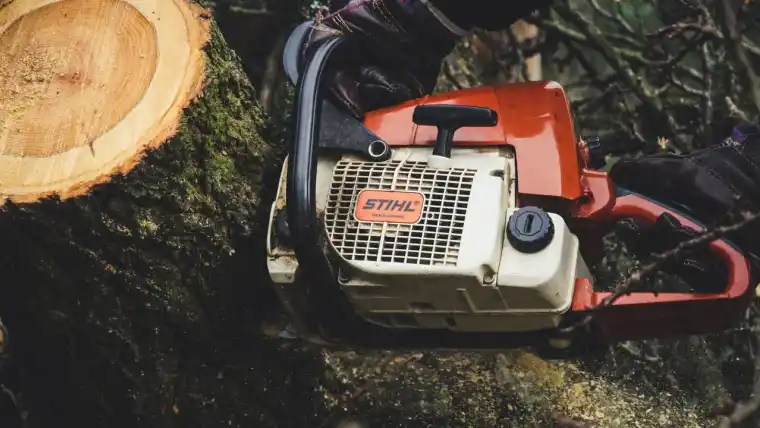
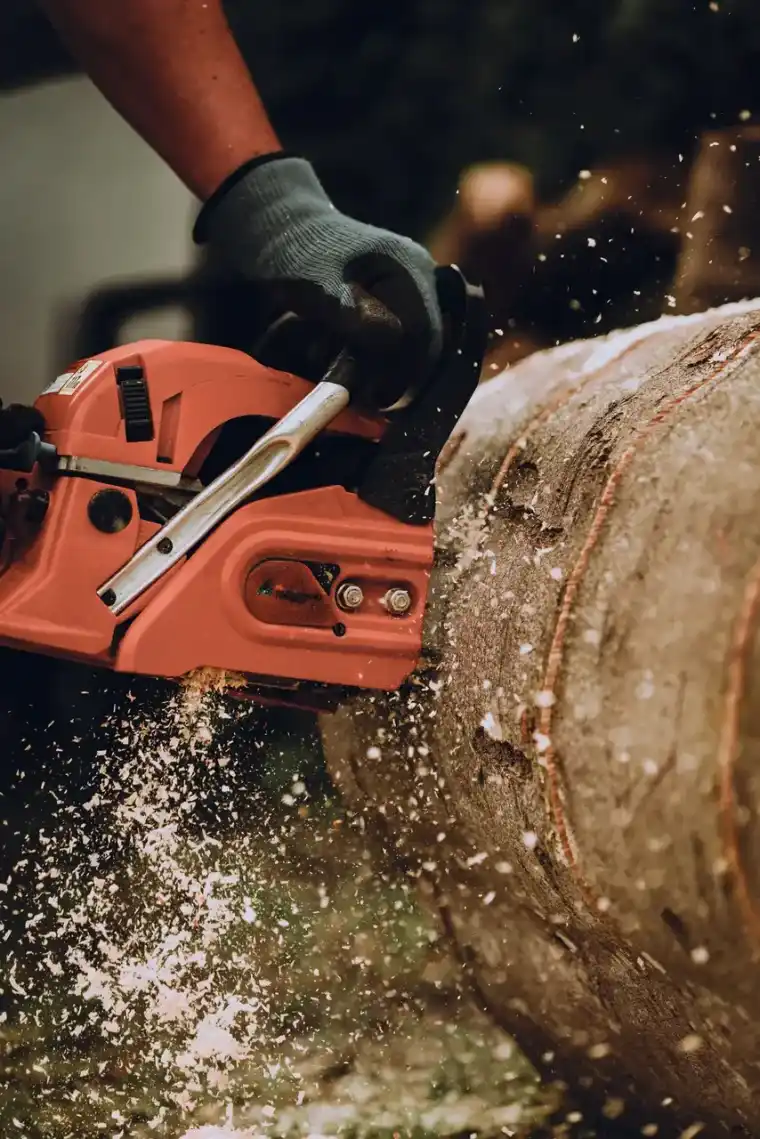
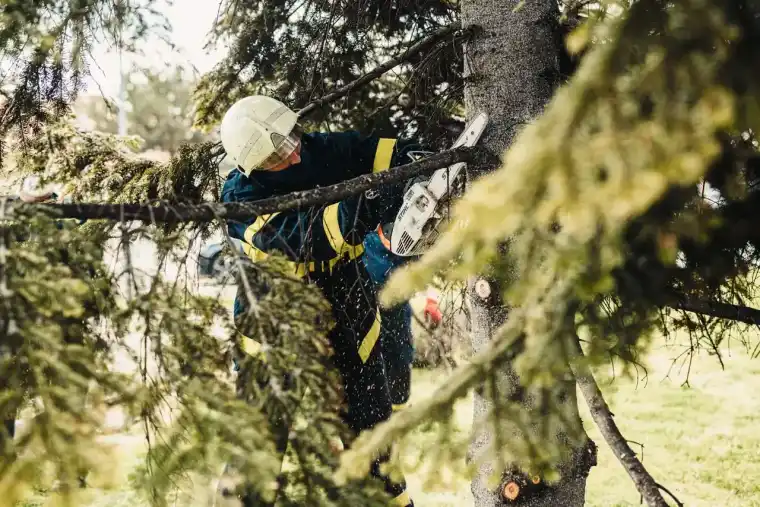
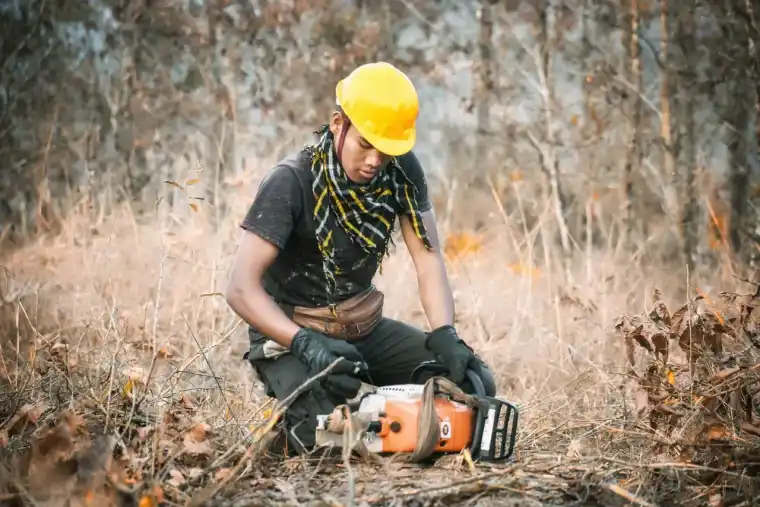
Representative of the work. Real job photography replaces these as the crews document jobs.
Coverage
Lawrence, Topeka, and everything between
We cover 14 towns across 5 counties. If your town is not pinned, call anyway. We are usually closer than you think.
- Home base
- 2229 Marvonne Rd
Lawrence, KS 66047 - Hours
- Mon to Fri
Often booked together
Emergency Tree Removal
A tree is on the house, across the drive, or leaning on a line. Call, do not fill out a form.
Fallen Tree Removal
A tree already down, cut up and hauled off, including off structures and vehicles.
Hazard Tree Evaluation
A written evaluation of whether a specific tree is likely to fail, and what to do about it.