
Commercial
Municipal and Right of Way in Lawrence and Topeka
Clearance work along roads, utility corridors, and public right of way.
Free written estimates · Cleanup included · Monday to Friday, 8 to 5
What the job includes
- Road and sight-line clearance
- Utility corridor and easement clearing
- Traffic control where the work touches a roadway
- Bid documentation and prevailing wage compliance where required
What right of way work covers
Right of way work is clearance work in a corridor that has to keep functioning while the work happens. Roads, alleys, utility easements, drainage easements, trails, and the strips between sidewalk and curb where most street trees live. The tree part is straightforward. The part that takes planning is doing it without closing the corridor longer than agreed.
The typical scope is vertical clearance over the travel lane so trucks and buses pass without contact, sight line clearance at intersections and driveways where a hackberry or a honeylocust has grown into the view, sign and signal visibility, and removal of dead and declining trees in the corridor before they come down on their own.
Easement and utility corridor work runs on the same logic with a different constraint. The vegetation has to come out far enough that it does not have to come out again next year, and the crew has to work around infrastructure that is expensive to touch.
- Vertical clearance over travel lanes, alleys, and bus routes
- Sight line clearance at intersections, driveways, and signage
- Dead and declining trees removed from the corridor
- Utility and drainage easement clearing
- Storm debris cleared from public rights of way after an event
Traffic control is part of the scope
Work touching a roadway needs a traffic control plan before it needs a chainsaw. That means flagging, cones, advance warning signage, and lane closure or shoulder work set up to the standard your jurisdiction requires, with the plan submitted and approved ahead of the work date rather than improvised on the morning.
Traffic control has a real cost and it belongs in the bid honestly. HomeGuide puts a two person flagging crew for street tree work at $175 to $225 per hour nationally. A bid that omits traffic control is not a cheaper bid, it is an incomplete one, and it becomes a change order the first day a lane has to close.
Timing is the other lever. Arterial work goes to the midday window between the commuter peaks. School zones get worked outside arrival and dismissal. Residential streets get worked with notice to the affected addresses, since closing a block people were not told about creates its own set of calls.
- Traffic control plan submitted and approved before the work date
- Flagging, cones, and advance warning signage to jurisdiction standard
- Midday off peak scheduling on arterials
- Notice to affected addresses on residential blocks
- Corridor restored to full function at the end of each work period
Utility corridors and the line clearance question
Not every wire is the same wire, and the difference determines who is allowed to do the work. The service drop running from the pole to a house is one thing. The primary distribution lines on the poles belong to Evergy and have to be de-energized or covered by their crews before anyone works near them.
We identify which situation a given tree presents before the job is scoped, and where the work belongs to the utility, we say so rather than sending a crew into it. That determination is part of the site assessment, not a discovery made on the day.
Corridor vegetation management is a cycle rather than an event. Species that resprout hard, including Siberian elm, mulberry, and hackberry, come back within a season or two unless the stump is treated. Eastern redcedar does not resprout from the stump, which is why cedar clearing holds. Writing the cycle interval into the scope up front is the difference between a corridor that stays clear and one that gets rebid every year.
How a project runs
Public work carries documentation requirements that private work does not, and most of them are front loaded. Getting them handled before mobilization is what keeps a project on its schedule.
Tell us at the pre-bid what documentation the project requires and in what format, because that is the part that gets a bid thrown out. A quantity that is wrong can be corrected. A missing form usually cannot.
- 1 Review the specification, the corridor limits, and any protected or heritage trees within them
- 2 Walk the corridor and log the work tree by tree with species, size, and scope
- 3 Identify utility conflicts and flag anything that requires the utility's own crews
- 4 Submit the bid with traffic control, disposal, and cycle intervals priced as line items
- 5 File the documentation the specification requires, in the format it requires
- 6 Submit and get approval on the traffic control plan for each work zone
- 7 Notify affected residents and businesses before mobilization
- 8 Execute in phases, restoring corridor function at the end of each work period
- 9 Deliver the completion record with photographs, quantities, and disposal documentation
Bid documents and the specification
Public bids get evaluated on responsiveness before they get evaluated on price. A bid missing a required form is not a low bid, it is a rejected one. We read the specification and answer what it asks, form by form, and we raise anything the documents leave ambiguous at the pre-bid rather than after award.
Quantities get priced the way the specification wants them priced. Per tree, per acre, per hour, or per linear foot of corridor, with disposal broken out so the awarding body can see what it is buying. Burying disposal inside a unit price makes a bid look competitive and makes the invoice look surprising.
Kansas has no state licensing requirement for tree removal companies, which means the specification has to do the work a license would do elsewhere. For a public agency that is worth building in explicitly: name the qualifications, name the documentation, and name the format they arrive in, because the state is not going to require any of it for you.
The aging street tree population in northeast Kansas
The Kansas Forest Service reports that 59 percent of the state's urban tree canopy is rated fair to poor, with dominant species including silver maple, elm, and pin oak aging and declining, and that street tree populations have dropped by 50 percent over recent decades. Anyone managing a corridor in Lawrence or Topeka is managing that reality tree by tree.
What it looks like on the ground is a lot of large, mature, structurally weak silver maple and Siberian elm standing over pavement, plus green ash on a countdown. Emerald ash borer is confirmed in thirteen northeast Kansas counties per K-State Research and Extension, and public ash inventories in the affected counties are either on a treatment cycle or on a removal schedule. Dead ash goes brittle and needs a crane, so an unmanaged public ash population converts itself into the most expensive version of the same work.
Handling that in an orderly way means inventorying the corridor, ranking by risk and target, budgeting removals across years rather than absorbing them all after one storm, and replanting with species that will still be standing in fifty years. Bur oak, chinkapin oak, Kentucky coffeetree, and hackberry all handle Kansas clay, heat, and wind. Planting a mixed population is the only real defense against the next single species pest.
Municipal and Right of Way questions
Do you handle traffic control or does the agency provide it?
Either, and the bid says which. When we provide it, the plan is submitted and approved before the work date and the flagging, cones, and advance signage go up to your jurisdiction's standard. HomeGuide puts a two person flagging crew at $175 to $225 per hour nationally, so it is a real line item and we price it as one rather than hiding it.
Can you work around power lines?
We work the service drops. The primary lines on the poles belong to Evergy and have to be de-energized or covered by their crews first. We identify which situation each tree presents during the site assessment and tell you plainly which items belong to the utility.
Do you meet prevailing wage requirements?
Yes, where the project requires it, including certified payroll submitted in the format the specification asks for. Tell us up front so it is priced into the bid rather than discovered afterward.
Can you bid a multi year corridor maintenance cycle?
Yes, and for corridors it is usually the better structure. Species that resprout hard, like Siberian elm, mulberry, and hackberry, need a defined return interval or the corridor closes back in. Eastern redcedar does not resprout, so cedar clearing holds. Writing the interval into the contract is cheaper than rebidding the same corridor every year.
What documentation comes with a completed project?
Photographs before and after, quantities by unit, tree by tree records where the specification calls for them, and disposal documentation. On storm response work, that package is built to support insurance and FEMA reimbursement claims.
How do you handle protected or heritage trees in the corridor?
They get identified and flagged during the corridor walk before the bid, not during the work. Where an ordinance protects specific trees or requires a permit for work in the right of way, we confirm the requirement with the jurisdiction and follow it rather than assuming private property rules apply.
Can you respond after a storm?
Yes, and public agencies with an agreement in place get dispatched ahead of general calls. After a regional event every crew in the county is committed within hours, so the queue position that matters is the one established before the storm rather than the phone call after it.
What should we plant back in the right of way?
Something long lived, tolerant of clay and heat, and different from what is already there. Bur oak, chinkapin oak, Kentucky coffeetree, and hackberry all perform here. The species mix matters as much as the species, since a corridor planted to a single species is a corridor that will be replaced all at once by whatever pest arrives next. Green ash is the current example.
Request a free estimate
Free, no obligation. We call back within 15 minutes.
Got it.
We call back within 15 minutes during business hours.
That did not send. Call and we will take it down over the phone.
(785) 371-4859Municipal and Right of Way in progress
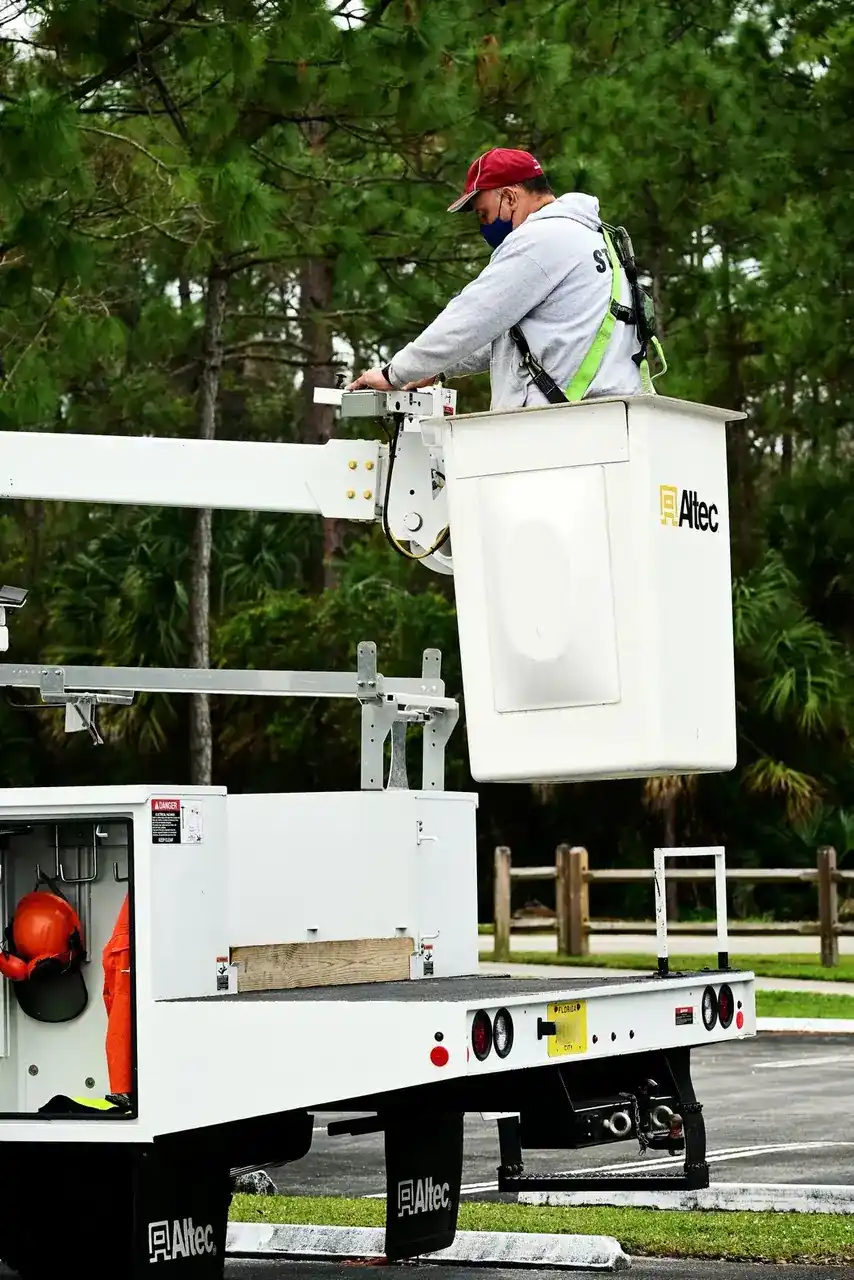
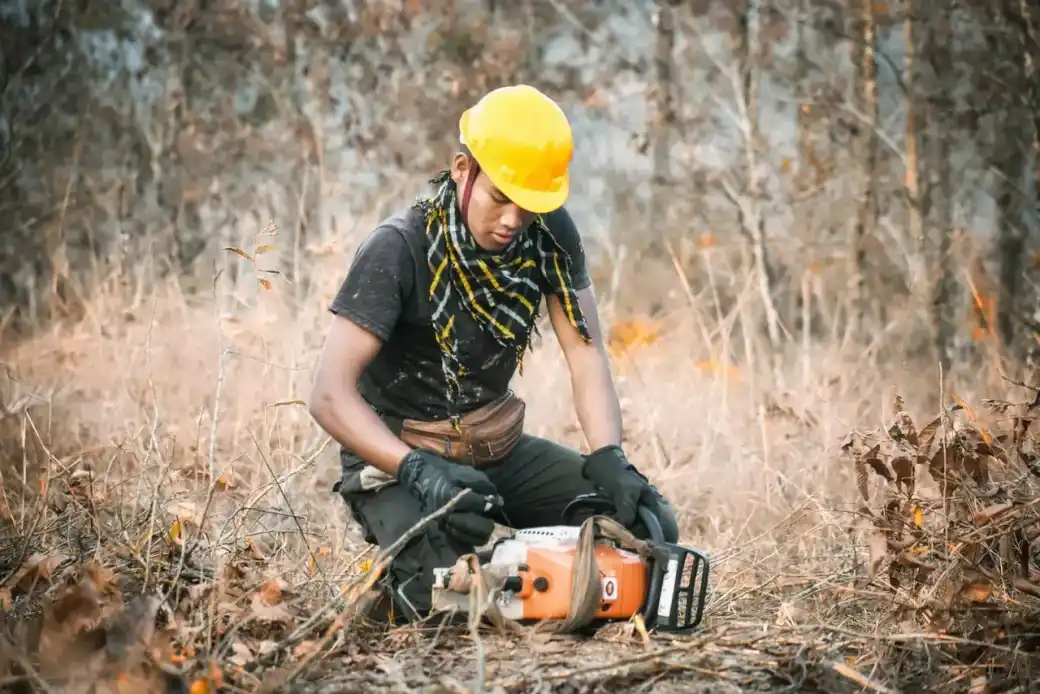
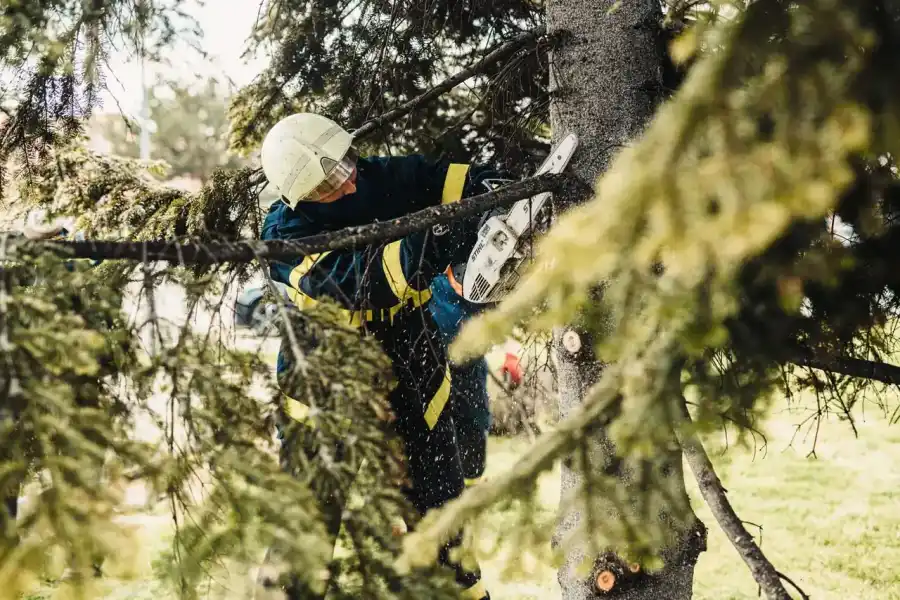
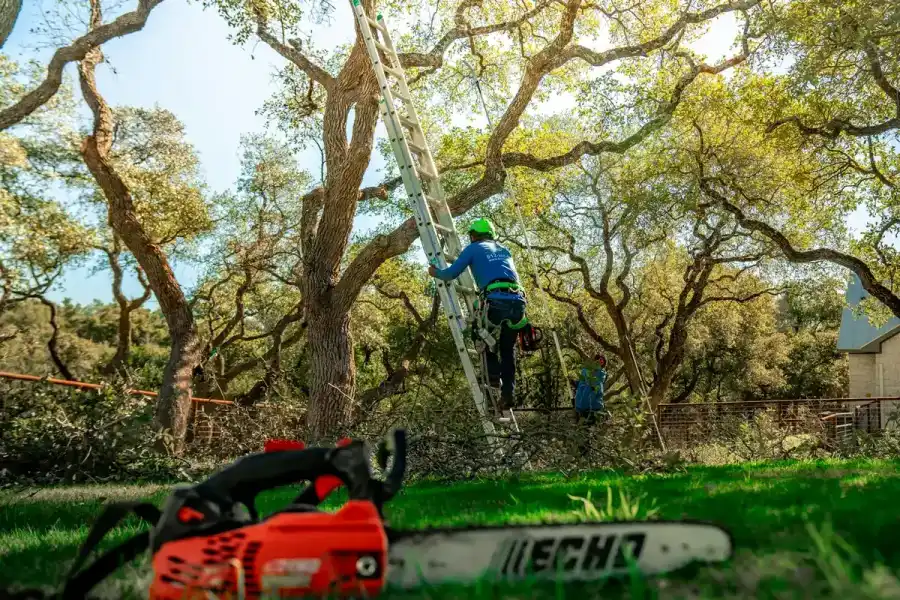
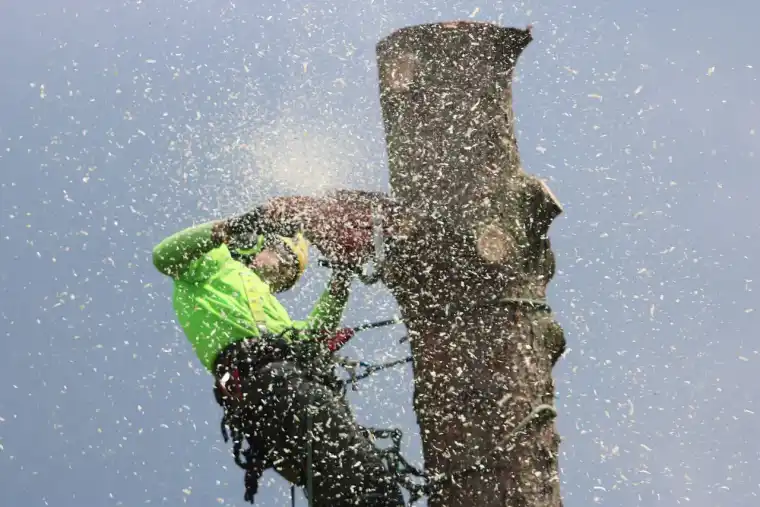
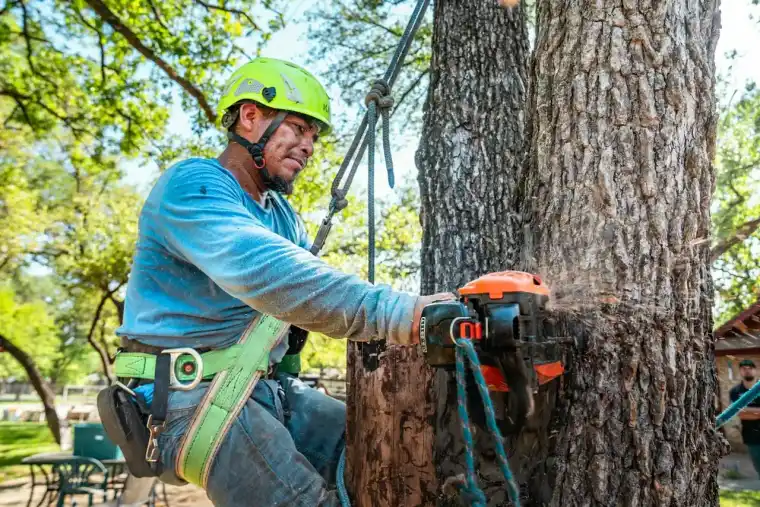
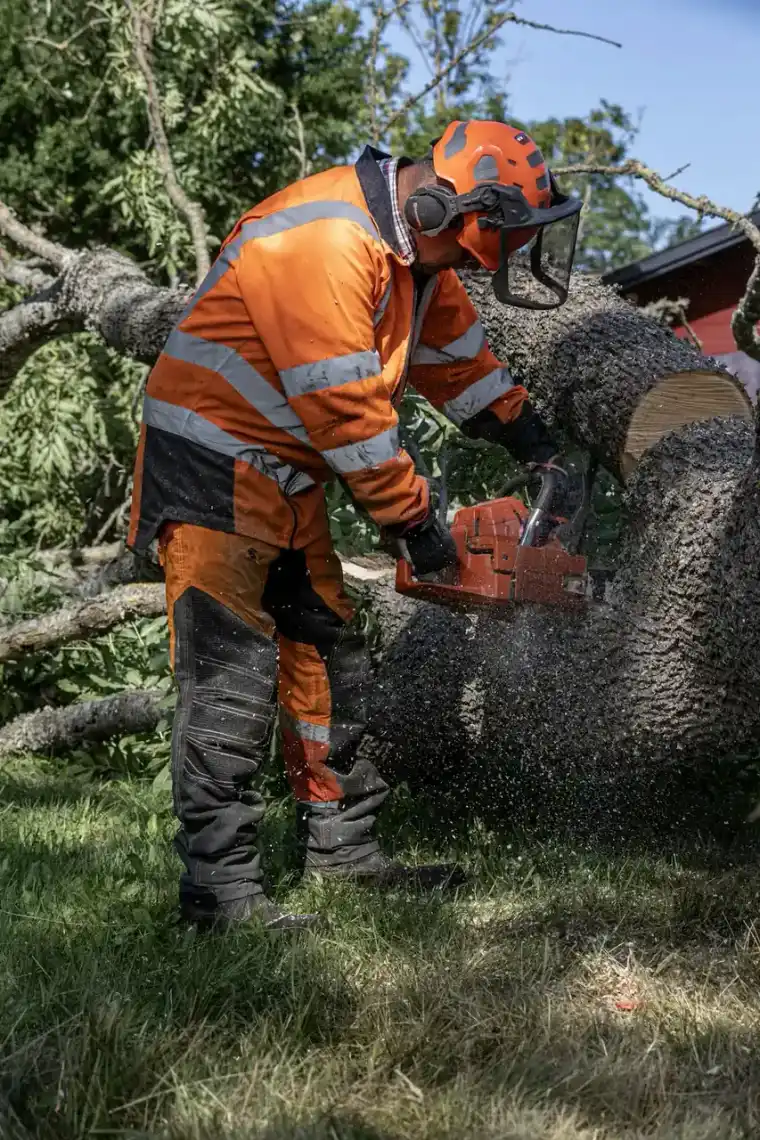
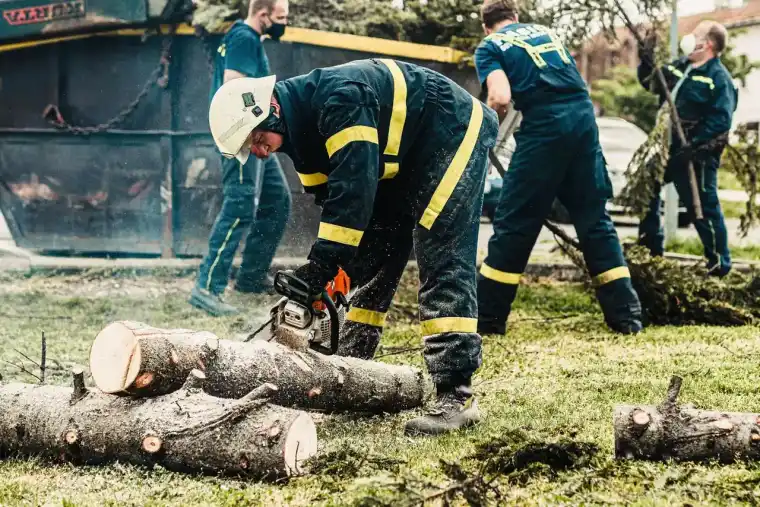
Representative of the work. Real job photography replaces these as the crews document jobs.
Coverage
Lawrence, Topeka, and everything between
We cover 14 towns across 5 counties. If your town is not pinned, call anyway. We are usually closer than you think.
- Home base
- 2229 Marvonne Rd
Lawrence, KS 66047 - Hours
- Mon to Fri
Often booked together
Commercial Tree Care
Scheduled tree work for businesses, with documentation, scheduling, and one point of contact.
Land Clearing
Clearing acreage of trees, brush, and cedar so the ground can be used.